
Car Dealership Photography: How to Make Every Listing Look Like Your Best Car
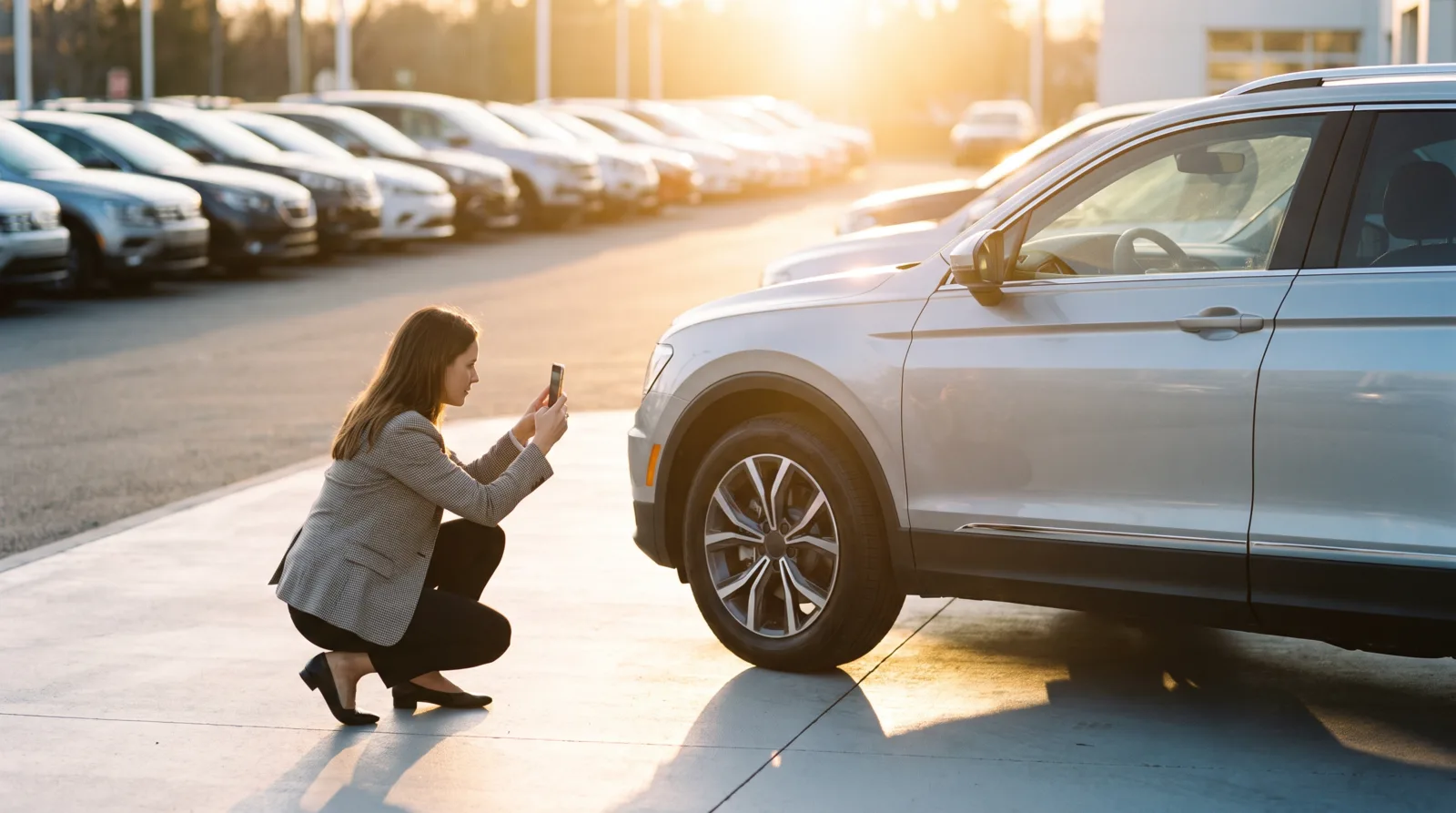
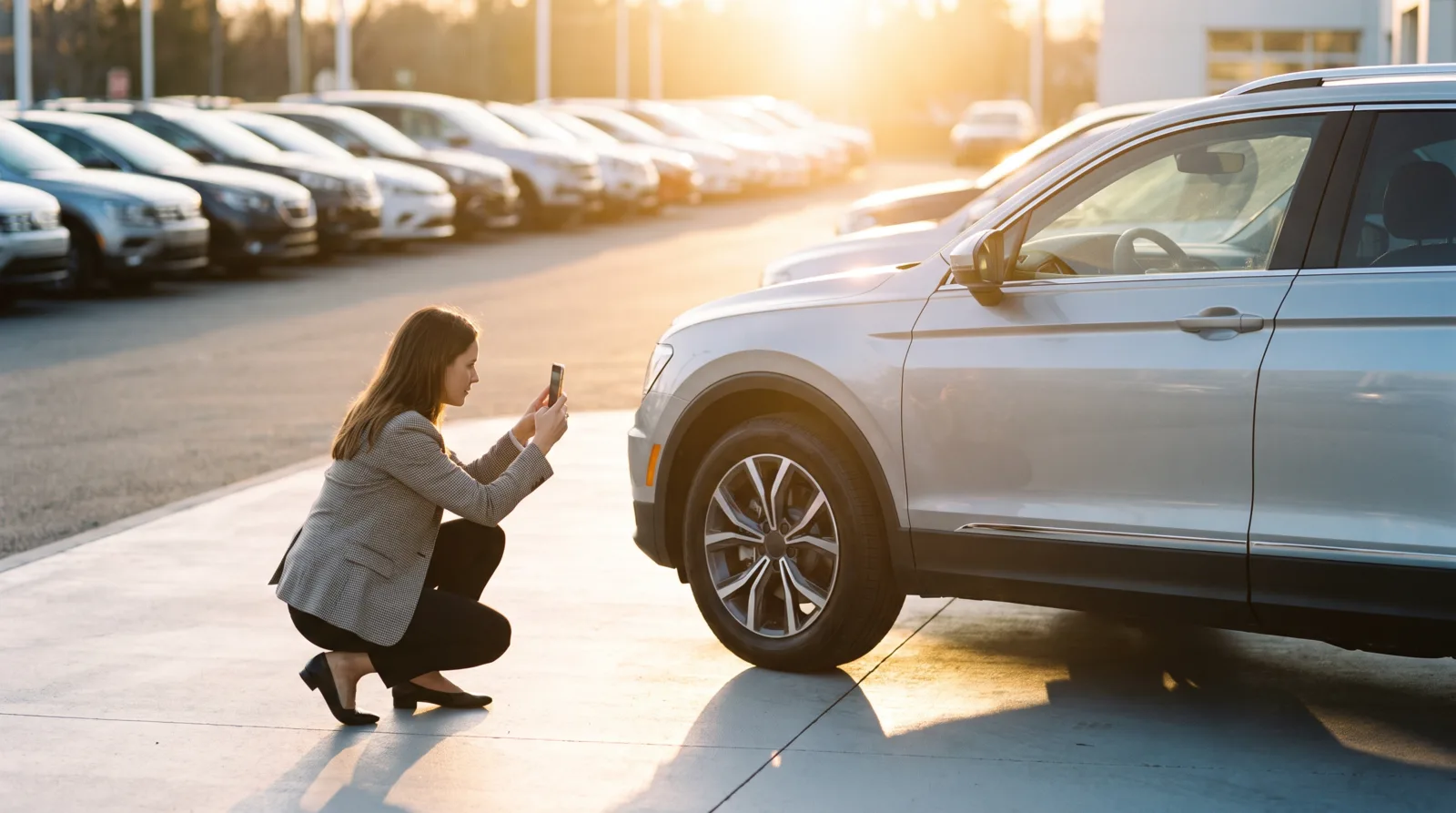
Car dealership photography is the practice of producing consistent, professional images of every vehicle in your inventory so listings earn more clicks, more leads and stronger gross. It is not the same as automotive photography for magazines or enthusiasts. Dealership photography is a volume discipline: dozens of cars a week, shot to one standard, published fast.
That last part matters more than most stores realise. A shopper comparing your listing against three others makes a judgement in seconds, and the judgement is almost entirely visual. The car with thirty sharp, evenly lit photos feels trustworthy. The car with six dark shots taken in a packed lot feels like a risk, whatever its actual condition.
Why dealership photos decide who gets the lead
Online marketplaces flattened the playing field. Your inventory sits beside every competitor's inventory on the same results page, at similar prices, with similar specs. Photography is one of the few merchandising levers you fully control.
Three things follow from that:
Consistency beats artistry. A shopper scrolling your inventory should see one visual standard, not a record of who was on shift and what the weather did. Inconsistent photography quietly tells buyers your operation is inconsistent too. This is why a consistent visual style for car listings is worth more than any single hero shot.
Speed is revenue. Every day a vehicle sits online without photos, or with placeholder stock images, is a day of lost demand during the exact window when a fresh unit attracts the most attention. Vehicles at many stores wait one to five days for a photographer visit or a booth slot. Cutting that to the same day changes turn.
Completeness closes gaps. Buyers expect exteriors from every angle, a full interior set, odometer, tyres, and honest close-ups. Listings that answer visual questions up front generate better-qualified enquiries and fewer wasted appointments.
The three traditional ways dealerships get photos
In-house staff with a checklist. Cheapest on paper, hardest to keep consistent. Quality depends on the person, the lighting and how busy the day is. Turnover resets the skill every time.
A photo vendor on a route. A professional visits once or twice a week. Quality is good, but cars that land between visits wait, and the per-vehicle cost adds up across hundreds of units a year.
A physical photo booth. A dedicated studio bay produces the most controlled results, but it demands space, capital, scheduling and someone to run it. For most single-point stores the maths never works. Our guide to studio, outdoor and virtual backgrounds covers this trade-off in detail.
The fourth way: AI dealership photography
AI-based dealership photography keeps the capture step simple and moves the quality step into software. A staff member walks the car with a smartphone following on-screen guidance, and the system handles backgrounds, lighting correction, angle correction and blemish clean-up, producing a studio-grade set from an ordinary lot shoot.
HelloRamp Studio works this way: a guided shoot of under five minutes per car on a standard smartphone, or processing of the photos you already have from your DMS or an inventory platform like vAuto, with every image reviewed by a human before it goes live. Auto Web Expo in Plano, Texas measured 25% more online leads after standardising its photography this way, and the group can shoot anywhere without losing the studio look. The full numbers are in the Auto Web Expo case study.
The practical difference is who carries the quality burden. With traditional methods, quality lives in the photographer. With AI photography, quality lives in the system, so any team member can produce the same result on their first day.
What a complete dealership photo set includes
A listing set that converts typically covers: front and rear three-quarter angles, direct front, rear and both profiles, wheels and tyres, the full dashboard, front and rear seats, boot or cargo area, odometer reading, and close-ups of any notable features or honest wear. Stores adding virtual 360 tours and interactive spin views on top of stills consistently see longer time-on-listing from shoppers.
That same set is what feeds every downstream channel, from the vehicle detail page to marketplaces to the reels your marketing team schedules through HelloRamp Social. Shoot once, publish everywhere.
For angle-by-angle technique, our guide to the best angles and compositions for car photography breaks down how to shoot each frame well.
How much does car dealership photography cost?
Costs vary by model. Vendor routes are typically priced per vehicle, and across a store turning significant monthly volume that recurs forever. A physical booth concentrates cost up front in fit-out and space. In-house staff photography hides its cost in labour hours and re-shoots. AI photography platforms are usually priced on monthly vehicle volume, which scales with the store rather than with headcount or square footage. When comparing, price the whole system: capture time, editing, re-shoots, days of lost listing time, and management attention.
Frequently asked questions
What is car dealership photography?
Car dealership photography is the systematic production of professional, consistent photos of every vehicle in a dealership's inventory for online listings, marketplaces and social channels. Its goals are speed, consistency and completeness rather than one-off artistic shots.
How many photos should a dealership listing have?
Most high-performing listings carry 25 to 40 images covering all exterior angles, the complete interior, odometer, tyres and feature close-ups. More angles reduce unanswered questions and produce better-qualified leads.
Can a smartphone really produce dealership-quality photos?
Yes, when paired with guided capture and AI processing. Modern smartphone sensors are sufficient; the historical gap was lighting, backgrounds and consistency, which AI correction now closes. HelloRamp.ai guided shoots take under five minutes per car on a standard phone.
Should dealerships hire a photographer or use software?
It depends on volume and geography. A single photographer suits low-volume stores with predictable intake. Multi-rooftop groups and higher-volume stores generally get better economics and faster time-to-listing from an AI photography platform, because quality no longer depends on one person's schedule.
HelloRamp Studio guides the walkaround, corrects the lighting and backgrounds, and produces the listing stills, the 360° spin and the video tour from one five-minute capture on a phone. No booth, rig or dedicated photographer.