
Car Walkaround Video: How to Shoot One That Sells (Shot List Included)
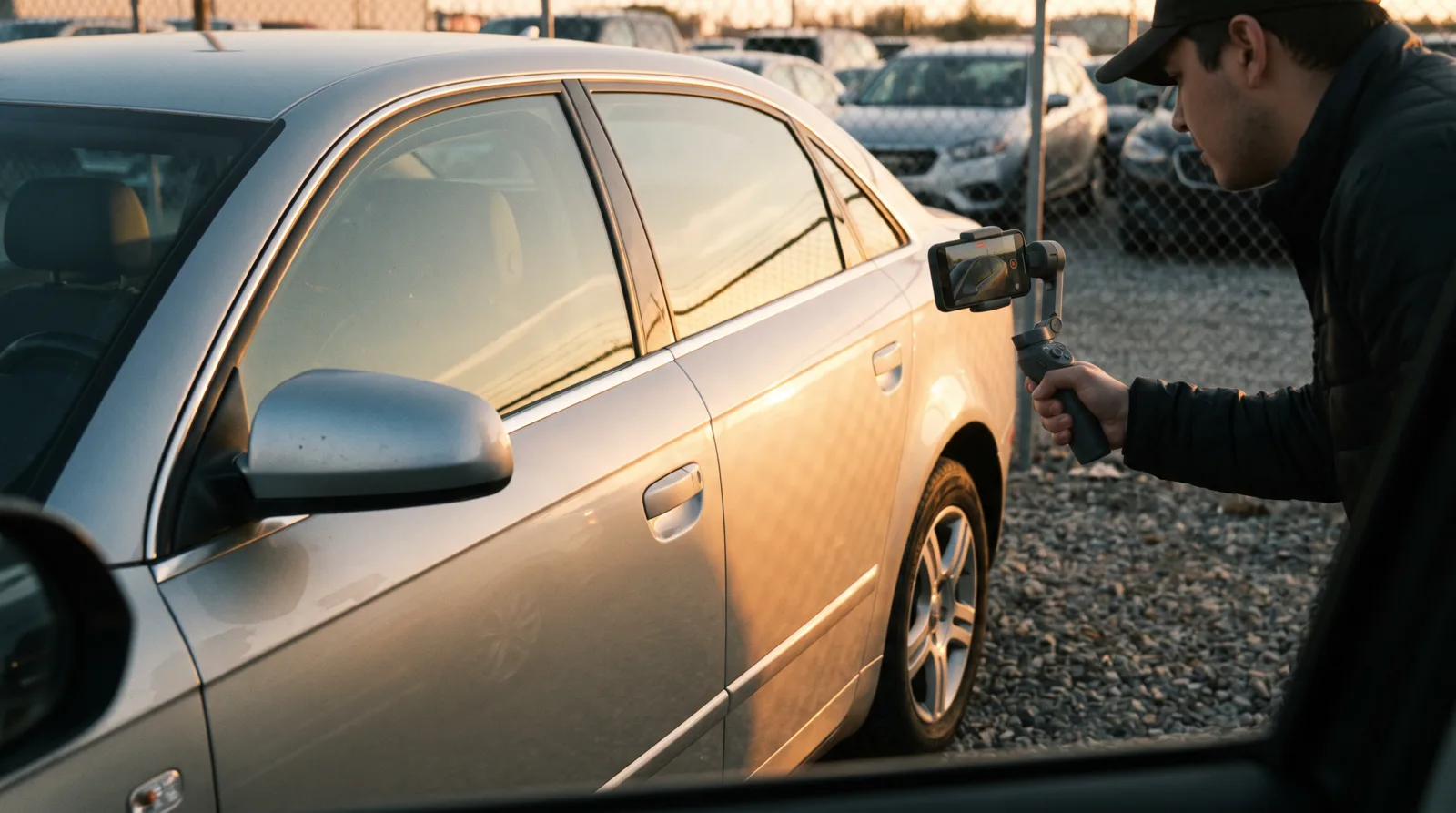
A car walkaround video is a continuous guided tour of a single vehicle, usually sixty seconds to three minutes, in which the camera moves around and through the car while a voice explains what the viewer is seeing. It is the most persuasive listing format in used-car retail because it does what stills cannot: it conveys condition, scale and honesty at once, with a human presence attached.
Key takeaways
- Shoot it as one continuous take. Visible cuts read as having something to hide, which is the opposite of what the format is for.
- The route is a sales presentation: front three-quarter, profile, wheels, rear, far side, interior ending on the odometer, then the one feature that answers "why this one?"
- Narrate to one person, not a market. Disclosed flaws convert; discovered flaws kill deals.
- Leave price out. Prices change faster than videos, and a stale on-camera number forces a re-shoot.
- Hand-shot walkarounds do not scale to a whole inventory, and they should not have to — they are the premium layer on top of automated coverage.
Before you press record
Prepare the car exactly as you would for photography: washed, cabin cleared, pulled away from other vehicles, wheels straightened.
Choose soft light — bright overcast, or early or late sun — and plan your route so you are never shooting into a light source. The best times of day for outdoor shooting apply here exactly as they do to stills, with one addition: because you are moving, you pass through several lighting conditions in one take, so walk the route once before recording to find where the sun will hit you.
Wipe the lens. Half of all smudgy dealership videos are a shirt-sleeve away from sharp.
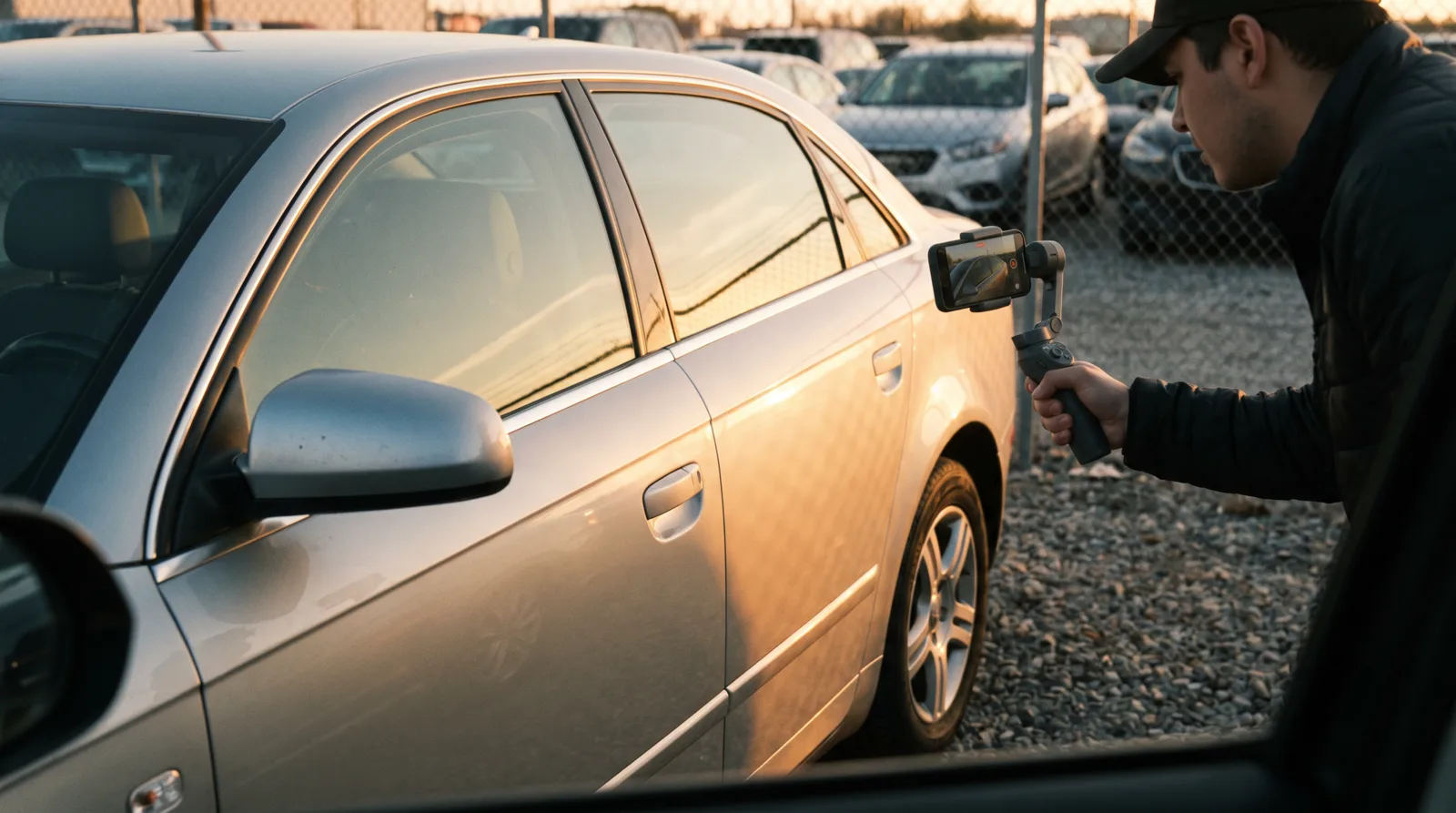
Phone settings. Landscape orientation for VDP and YouTube use, 1080p or 4K, and lock exposure on the car so the image does not pulse as you move. That last one matters more than stabilisation: a slightly unsteady shot reads as authentic, but an image that brightens and darkens every few steps reads as amateur. A basic gimbal helps but is optional; smooth footwork — small steps, knees soft, elbows in — gets you most of the way.
The route: one continuous story
The classic walkaround route reads like a sales presentation because it is one.
| Step | Shot | What it does |
|---|---|---|
| 1 | Front three-quarter, hold two seconds | Lets the viewer register the car before anything moves |
| 2 | Track slowly down the profile | Light rakes the panels; this is where honesty lives |
| 3 | Tilt down at the wheels | Buyers rewind for this; give them the shot |
| 4 | Round the rear, boot open if relevant | Answers the cargo question without being asked |
| 5 | Up the far side into the interior | Dashboard, wheel, seats front and rear |
| 6 | The odometer | Always. Its absence is louder than its number |
| 7 | Close on the one selling feature | Answers "why this one?" |
Track down the side. Walk slowly along the profile, letting light rake the panels. This is where honesty lives; do not rush past the bodywork. A viewer who sees you linger on a clean flank believes you when you linger elsewhere.
Pause at the wheels. A slow tilt down to tread and wheel face. Used-car buyers rewind to look at wheels; give them the shot rather than making them work for it.
Round the rear. Boot open if cargo space is a selling point for this vehicle.
Up the far side to the interior. Open the driver's door and settle: dashboard, wheel, seats front and rear, and the odometer, always the odometer.
Close on the feature that sells this car. The one thing — the panoramic roof, the service history folder on the seat, the immaculate second row — that answers "why this one?"
Narration: talk to one person
The narration makes or breaks the video.
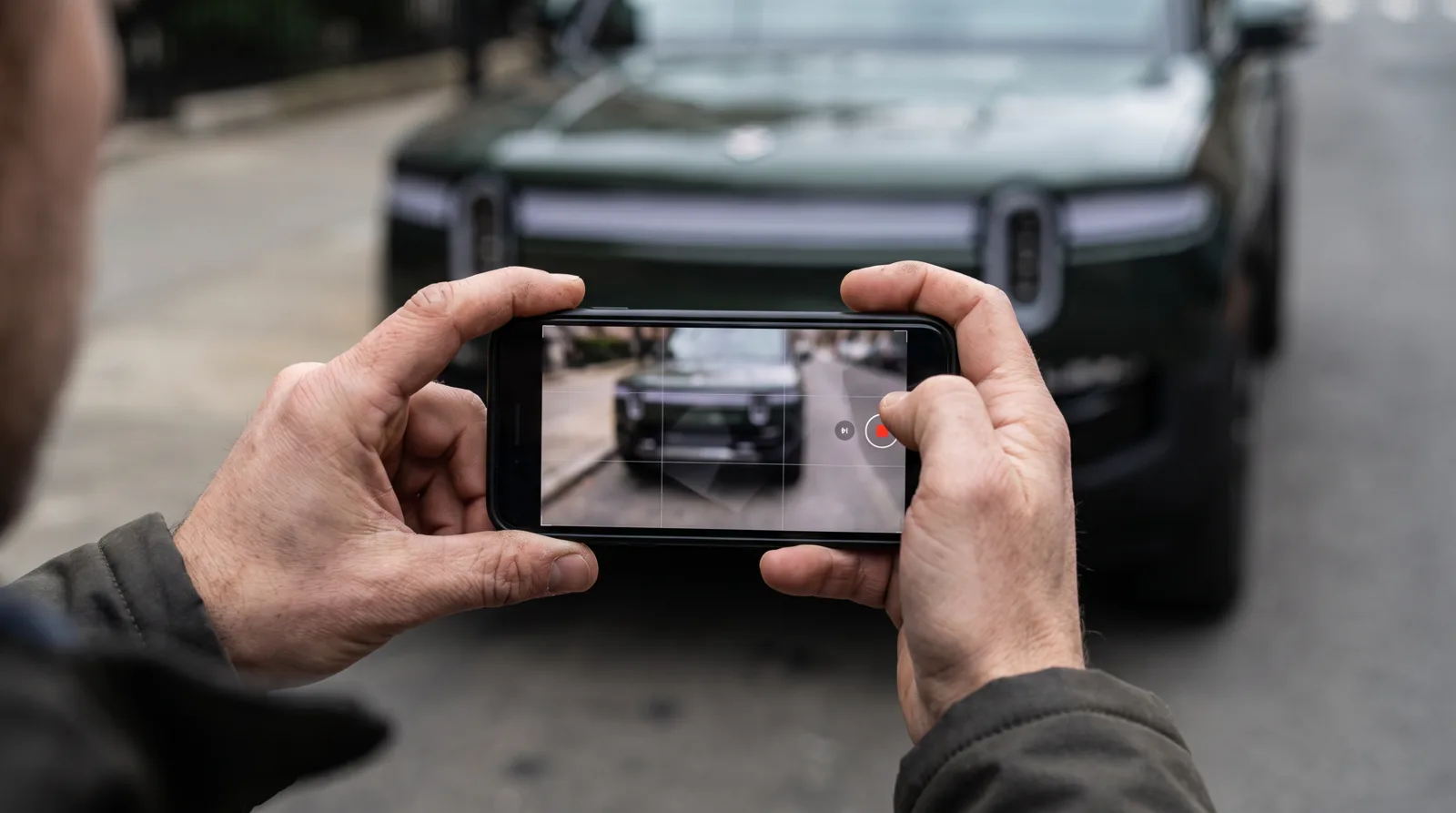
The register that works is one rep talking to one interested buyer, not an announcer addressing a market. Name the car plainly, point at what the camera shows, and volunteer the honest details: "there's a small mark on this door, I'll show you up close." Disclosed flaws convert; discovered flaws kill deals. The buyer who sees the scuff in your video and comes anyway has already accepted it. The buyer who finds it on the lot is now renegotiating.
Skip the price talk. Prices change faster than videos, and a stale on-camera price forces re-shoots of work that was otherwise still good. End with a simple invitation to reply or book a look.
If speaking to camera is the blocker for your team, practice is the answer: the third take is nearly always the keeper. Keep takes, do not edit. A walkaround with visible cuts reads as having something to hide, and the format's entire advantage is that it looks unedited.
Where the video goes
One capture should earn three placements.
The VDP. The full-length take, sitting with the photos and the spin. This is the version that does the persuading, and length is not the enemy here — a shopper who has clicked into one specific car will watch three minutes.
The follow-up. Attach it to the reply when someone enquires on that unit. A walkaround already shot is a personal touch that costs nothing to send twice.
The social cut. Thirty to sixty seconds, vertical, opening on the strongest three seconds rather than the front three-quarter hold — social viewers did not choose this car, so the video has to earn the next second immediately. The full-length opening that works on a VDP is the wrong opening here.
Shoot once, landscape, and cut down for social rather than the reverse. Cropping landscape to vertical loses the sides of the car; upscaling vertical to landscape loses everything.
Scaling walkarounds across an inventory
One good walkaround is craft. A walkaround on every unit is a system problem, and the honest constraint is rep time — a rep who shoots forty walkarounds a week is a rep who is not selling.
Two developments changed the maths.
Capture unification. HelloRamp Studio generates an immersive video tour for every vehicle from the same under-five-minute guided smartphone shoot that produces the photos and the 360° spin, so baseline motion coverage exists on every car without anyone filming a walkaround at all.
Personalisation on demand. When a specific lead asks about a specific car, HelloRamp Engage produces a personalised video reply in about ten seconds — the rep's AI avatar over that car's live media, script drafted from the lead and vehicle record. That is a different job from a walkaround, and it is covered properly in AI for dealership lead management.
The hand-shot walkaround then becomes what it should always have been: the premium human touch reps add where it counts, on top of complete automated coverage. Not every car needs a rep's voice. The aged unit, the one with a story, the one a specific buyer is circling — those do, and a rep who shoots five good walkarounds a week instead of forty mediocre ones will out-sell the alternative every time.
Frequently asked questions
How long should a car walkaround video be?
Sixty seconds to three minutes. Under a minute feels rushed for a full tour; past three minutes watch-through collapses. Social cuts should run 30 to 60 seconds.
What is the best route for a car walkaround video?
Front three-quarter, down the profile, wheels, rear, up the far side, interior ending on the odometer, then close on the vehicle's single strongest feature, shot as one continuous take.
Should walkaround videos mention price?
Generally no. Prices change faster than videos, and a stale on-camera price forces re-shoots. Keep pricing on the listing and let the video sell the car.
Can AI create walkaround videos automatically?
AI platforms generate per-vehicle video tours from guided smartphone capture, giving every listing baseline motion coverage, and produce personalised video replies in seconds. Hand-shot walkarounds then serve as the premium human layer on priority units.
Do I need a gimbal to film a car walkaround?
No. A basic gimbal helps, but smooth footwork gets you most of the way: small steps, soft knees, elbows in. Locking exposure on the car matters more than stabilisation, because a pulsing image is more distracting than a slightly unsteady one.
HelloRamp Studio guides the walkaround, corrects the lighting and backgrounds, and produces the listing stills, the 360° spin and the video tour from one five-minute capture on a phone. No booth, rig or dedicated photographer.