
Days to Photo: How to Measure It, What It Costs and How to Cut It
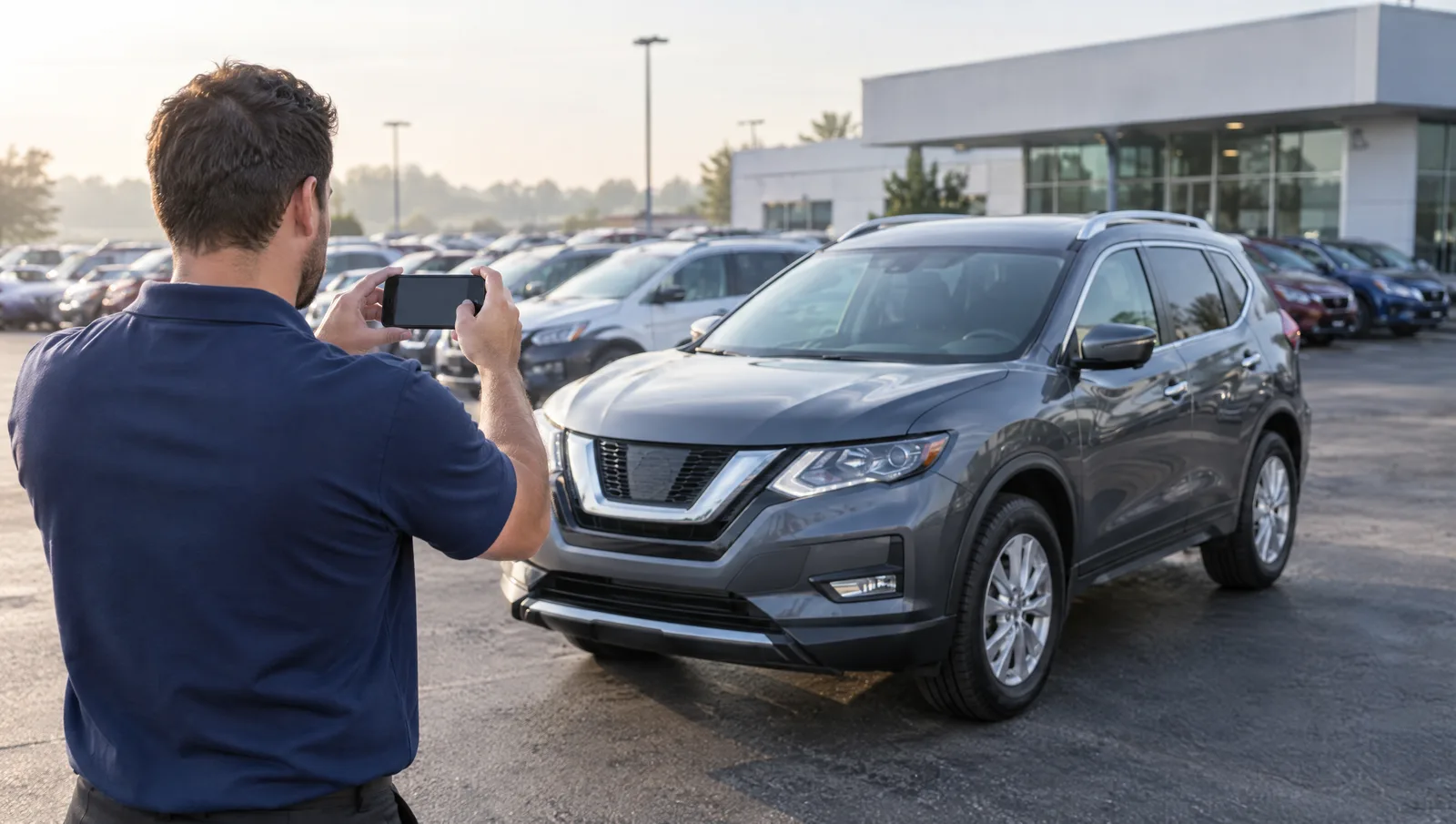
Days to photo is the number of days between a used vehicle's arrival or acquisition date and the moment its first real photo set goes live online. It measures how long a car costs money in inventory while shoppers cannot see it. A practical target is photos live the same day the car arrives, and no later than 24 hours.
This guide covers how to define and measure it, what a slow number costs, where the days go, and a 30-day plan to bring it down.
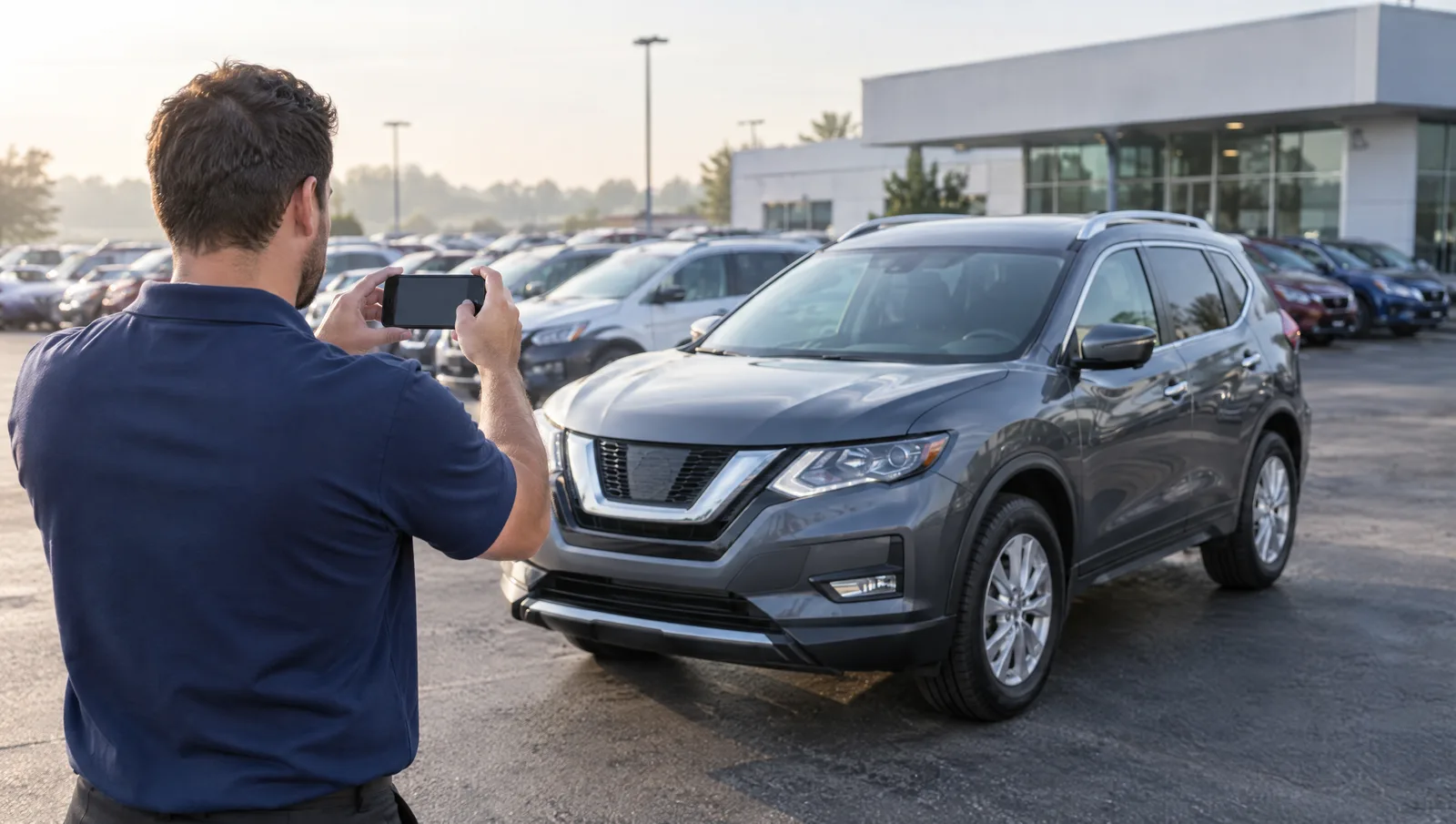
What does days to photo measure, and how is it different from time to line?
Days to photo starts when the dealership takes possession of the vehicle: a trade-in accepted, an auction unit delivered or a lease return checked in. It ends when the first set of actual photos is published on the website and the marketplace feeds. Stock photos, placeholder graphics and "photo coming soon" images do not count as the end point.
It sits beside a few related metrics that are often confused:
| Metric | Starts | Ends | What it tells you |
|---|---|---|---|
| Days to photo | Arrival or acquisition date | First real photo set live online | How long the car is invisible to online shoppers |
| Time to line (days to frontline) | Arrival or recon start | Car is sale-ready on the front line | How fast reconditioning finishes |
| Days to sale | Arrival or acquisition date | Deal is delivered | Total time the car spent in inventory |
| Days' supply | Market or store measure | Not applicable | How many days current inventory would last at the current sales rate |
How do you measure days to photo in your DMS or inventory tool?
You need two timestamps per vehicle, pulled the same way every time:
- Start: the inventory date. Use the stock-in date in your DMS or the acquisition date in your inventory management tool. Pick one and keep it. If trades are stocked in a day after they arrive, note that lag or use the appraisal close date instead.
- End: the first photo publish date. Your website provider, photo tool or inventory tool usually logs when the photo count on a unit changed from zero (or from a placeholder) to a real set. If it only logs "last updated", ask your vendor for the first-publish field.
If you use an inventory tool such as vAuto, its aging and merchandising views can show photo status by unit, which makes a daily "no photos" list easy to pull. Our overview of vAuto for dealers explains what the tool covers.
How much does slow photography cost a dealership?
A listing with no real photos gives shoppers little reason to click, and much of used-car shopping now starts online. So every day of days to photo can add close to a day to days to sale, while holding costs keep running.
For context, the US used-vehicle market had 44 days' supply in August 2026, according to Cox Automotive. Days' supply is a market measure, not unit age. Still, four days before a car is visible equals about 9% of that figure.
Holding cost is the other half. A 2017 Cox Automotive article includes a worked example of dealership holding cost that comes to $44.63 per unit per day. It is an illustration built from sample inputs, not an industry average. An older figure, $32 per vehicle per day, was attributed to NCM Associates in a 2015 Rapid Recon press release. Your own number depends on your floor plan rate, depreciation and lot costs.
Illustrative example (our own arithmetic, not industry data). A store with 60 used arrivals a month and an average of 4 days to photo carries 240 vehicle-days a month with no photos online.
| Scenario | Vehicle-days without photos per month | At $44.63/day (Cox example) | At $32/day (NCM, 2015) |
|---|---|---|---|
| 4 days to photo | 240 | $10,711 | $7,680 |
| 1 day to photo | 60 | $2,678 | $1,920 |
| Difference | 180 | $8,033 | $5,760 |
Where do the days get lost?
When stores map their days to photo, the delay usually comes from a few repeat causes:
- Waiting for the photographer. A vendor that visits two or three days a week, or one staff member who shoots everything, turns every arrival into a queue.
- Waiting for recon. Many stores hold photos until the car is detailed, and detail is often the last step. If recon takes a week, so does days to photo.
- Weather and light. Rain, snow and harsh midday sun postpone outdoor shoots, especially where there is no covered area.
- Re-shoots. A missed angle, a dirty interior, a visible plate or a reflection in the door sends the car back into the queue.
- Upload and processing. Photos taken on Tuesday sit on a camera card or wait for editing, and only reach the website on Thursday.
- Feed lag. Once photos are on the website, marketplace feeds may need another refresh before they show on third-party sites.

How fast should a car be photographed after it hits the lot?
Aim for photos live the same day the car arrives, and no later than 24 hours. This is a target we recommend, not an industry statistic. The reasoning is practical:
- A car that arrives in the morning can be shot before noon and be online by the afternoon, before shoppers browse in the evening.
- A 24-hour rule gives every car the same treatment, including late arrivals, which can be shot at close of business.
- Anything past 48 hours usually means the car is waiting on another process, such as recon or a vendor visit, rather than on photography itself.
Can you list a car online before reconditioning is finished?
Yes, if the vehicle is physically in your possession and the listing is honest about its status. No, if the car has not arrived yet or you are not sure you will keep it.
The rules point in the same direction. CarGurus' dealer pricing guidelines say "the listed vehicle must be in the dealer's possession and available for purchase." In the US, the FTC warned 97 auto dealership groups on March 13, 2026, and listed "advertising unavailable or non-existent vehicles" among the practices it cited. The FTC's price transparency FAQs for auto dealers, published September 15, 2026, also cover how to advertise accurately when vehicles are in transit. Canada and other markets set their own advertising rules.
A practical approach for an "in recon" listing:
- Only list cars that are on your lot and that you intend to retail.
- Use real arrival photos of that exact car, not stock images.
- State plainly that the vehicle is in reconditioning and give an expected ready date.
- Replace the photos with the final set as soon as detail is done.
How can you cut days to photo in 30 days?
- Days 1 to 7: measure. Pull the start and end timestamps for last month's arrivals. Calculate the average, the median and the share photographed within 24 hours. Walk 10 cars through the process and note where each one waited.
- Days 8 to 14: remove the queue. Make photography a job more than one person can do. Train two or three people per shift (porters, lot staff, sales assistants) on a fixed shot list. Set a rule: every arrival is photographed the day it lands, before the end of the shift.
- Days 15 to 21: split the photo sets. Decide which cars get an arrival set and which wait for detail. Write the disclosure wording for in-recon listings and get it approved.
- Days 22 to 30: close the publishing gap. Check how long photos take to go from phone or camera to the website and marketplaces. Remove manual upload steps where you can. Put days to photo on the weekly used-car meeting agenda next to aging.
Days to photo is one of the few inventory metrics a store can improve within a month without changing what it buys or how it prices.
Sources
- Cox Automotive: Used-vehicle inventory, August 2026 (September 11, 2026)
- Cox Automotive: Three floor plan finance formulas every dealer should know (July 25, 2017, worked example)
- Rapid Recon via PR Newswire: Dealers surprised to learn cost of traditional recon process (December 14, 2015)
- CarGurus: Guidelines for dealer pricing and marketing (October 13, 2026)
- FTC: FTC warns 97 auto dealership groups about deceptive pricing (March 13, 2026)
- FTC: FTC publishes price transparency FAQs for auto dealers (September 15, 2026)
Frequently asked questions
What is a good days to photo target for a used car department?
A practical target is photos live online the same day a used car arrives, and no later than 24 hours. Past 48 hours, the car is usually waiting on another process, such as reconditioning or a vendor visit, rather than on photography itself.
How does days to photo affect days to sale?
A car without real photos draws little online attention. So each day before photos go live can add close to a day to the total time the car spends in inventory. Holding costs such as floor plan interest and depreciation keep running during those days.
What is the difference between days to photo and days to frontline?
Days to photo ends when the first real photo set is live online. Days to frontline, also called time to line, ends when reconditioning is complete and the car is sale-ready. A car can be photographed before it is frontline-ready, so track the two numbers separately.
Do stock photos or placeholder images count toward days to photo?
No. Days to photo should stop only when actual photos of that specific vehicle are published. Stock images, coming-soon graphics and placeholder photos do not show the car a shopper would buy, so counting them hides the real delay.
How do you calculate what slow photography costs a dealership?
Multiply monthly used arrivals by average days to photo to get vehicle-days without photos. Then multiply by your daily holding cost. For example, 60 cars at 4 days is 240 vehicle-days. At $44.63 a day, a Cox Automotive worked example, that is about $10,711 a month.
HelloRamp Studio guides the walkaround, corrects the lighting and backgrounds, and produces the listing stills, the 360° spin and the video tour from one five-minute capture on a phone. No booth, rig or dedicated photographer.