
Car Dealership Social Media Marketing: A System, Not a Chore
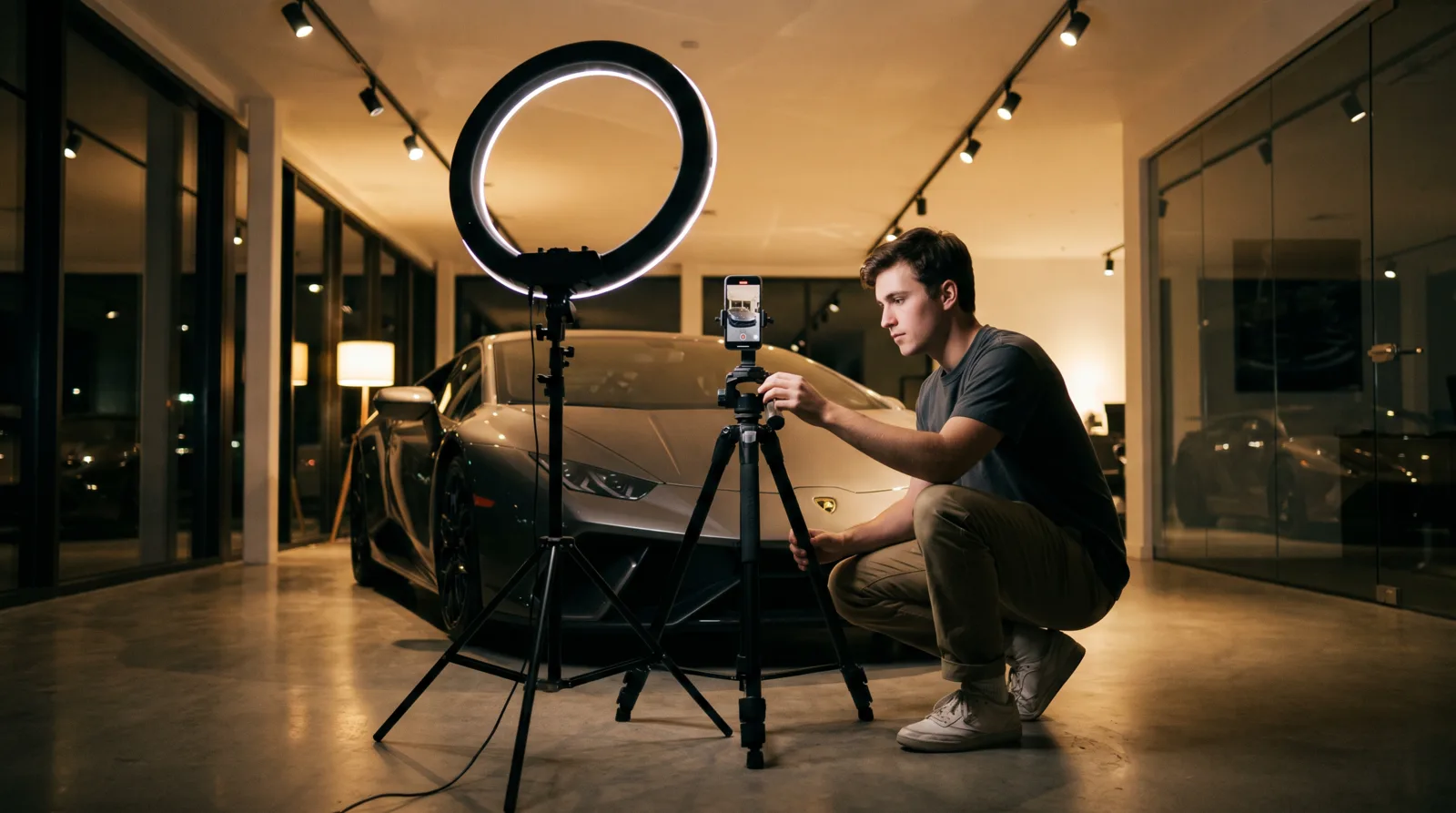
Car dealership social media marketing works when it is run as a system: a consistent posting cadence, content built from the inventory you already photograph, and a clear split between what gets automated and what stays human. It fails when it is treated as a side task for whoever has a spare hour.
Key takeaways
- Consistency beats brilliance. A page posting good inventory content daily builds more local familiarity than one clever video a month.
- Dealerships sit on a content goldmine: every vehicle that arrives is a fresh subject. The failure is almost never a lack of content.
- Split the load. Automate the inventory backbone; keep deliveries, testimonials, community posts and replies human.
- Local recognisable content beats stock footage, because familiarity is the entire point of local social.
- Judge it over quarters. Social is an assist channel — its job is making every other channel convert better.
Why social is different for dealerships
A dealership's social audience is mostly local, mostly not in-market today, and occasionally very in-market indeed.
That shape dictates the strategy. You are not trying to go viral nationally; you are trying to be the store a local buyer already knows and half-trusts by the time their lease ends. A post that reaches four hundred local people, sixty of whom will buy a car within two years, is worth more than one that reaches forty thousand strangers nationwide.
The second difference is that dealerships sit on a content goldmine other local businesses envy. Every vehicle that arrives is a fresh subject: new stock, price drops, sold units, before-and-after reconditioning. If your photography workflow is producing studio-grade images for the website anyway, the raw material for social already exists. The failure is rarely a lack of content; it is the absence of anyone whose job is turning inventory into posts.
The content mix that works
| Content type | Cadence | Who makes it | Automate? |
|---|---|---|---|
| Inventory posts | Daily | Generated from listing media | Yes — this is the backbone |
| Video | 2-3 a week | Walkarounds, deliveries, explainers | Partly |
| Customer proof | Weekly | Your team, at handover | No |
| People and place | Weekly | Your team | No |
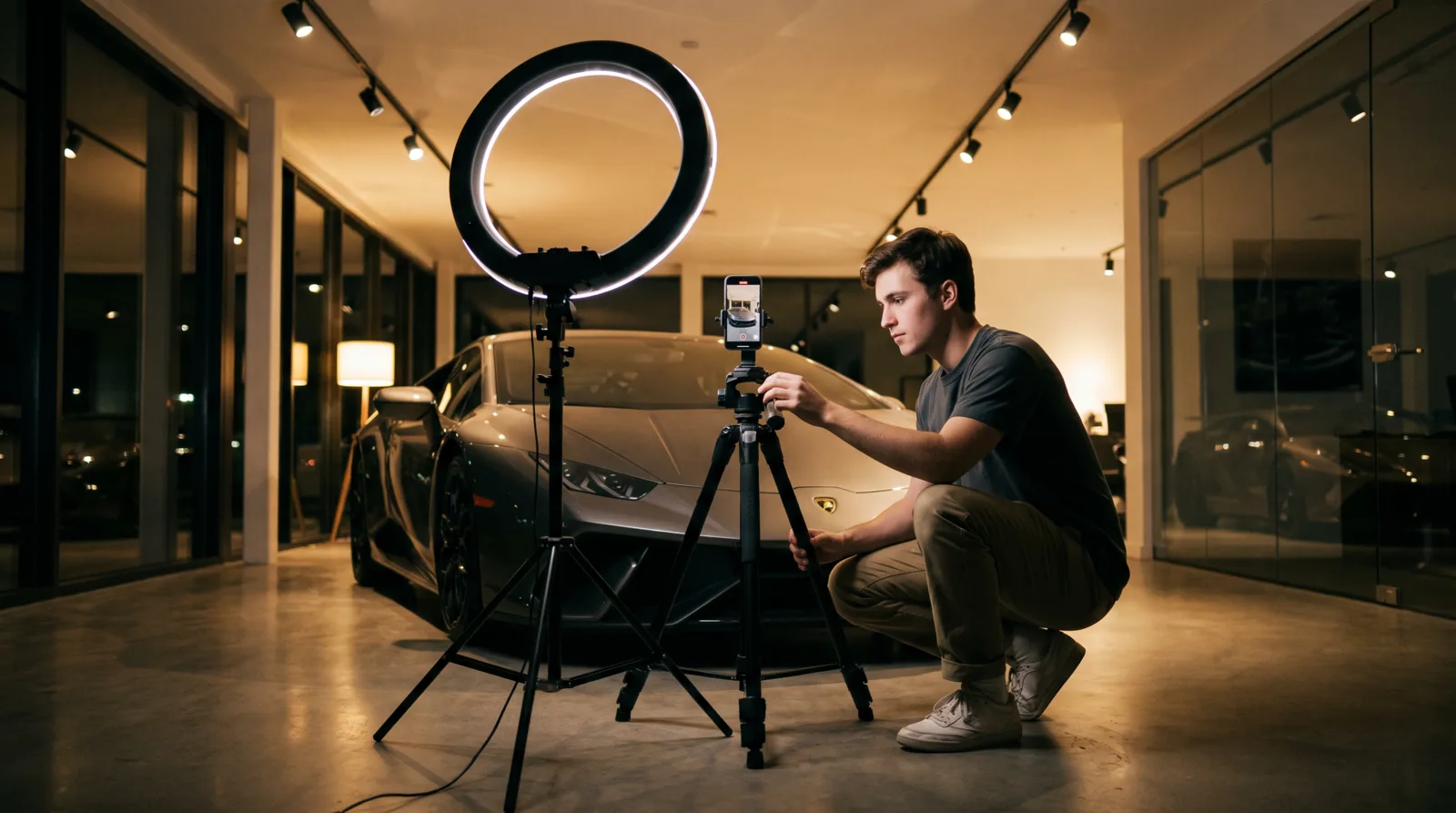
Video. Walkarounds, delivery moments, quick feature explainers. Video consistently earns more reach than static posts, and your video marketing programme should feed social directly rather than living in a separate silo — a walkaround video shot for a VDP cuts down to a social clip with no extra shoot. For stores worried about production effort, dealership stock video has a place for filler, but recognisable local content — your actual cars, your actual people, your actual showroom — outperforms generic footage because familiarity is the entire point of local social.
Proof. Customer testimonials, reviews, delivery photos with permission. Nothing sells a store to a sceptical local audience like other locals visibly having a good experience.
People and place. Team introductions, service tips, community involvement. A modest share of the mix, but it is what makes the page feel like a business run by humans rather than a listings feed with a logo.
Who does the work: the automation split
Here is the honest constraint: no one at a dealership has time to post daily, and hiring for it rarely survives a budget review. The workable answer is splitting the load.
Automate the backbone. HelloRamp Social turns your existing vehicle media into daily branded posts and publishes them on schedule across Instagram, TikTok, Facebook and YouTube, and keeps Facebook Marketplace listings in sync with inventory as part of the same programme. Every asset passes through HelloTrust, a 24/7 human quality check, before it goes live, so automation does not mean unreviewed. That covers the cadence problem outright: the page stays alive whether or not anyone at the store thought about social that day.
Keep the human layer human. Delivery moments, testimonials, community posts and replies to comments should come from your team, because that is the content automation cannot fake and the audience can tell. With the backbone automated, this human layer needs perhaps an hour or two a week — a workload a store can actually sustain past the second month, which is where most social plans collapse.
What usually goes wrong
Three failure patterns account for most dead dealership pages.
The relaunch cycle. A store commits, posts hard for three weeks, then a sales push or a staff departure interrupts it and the page goes quiet for months. The fix is not more discipline; it is removing the daily decision from a human entirely.
The brochure feed. Every post is a price banner or a promotion. Nothing on the page suggests a human works there, so the audience learns there is nothing to look at and the algorithm agrees.
The mismatched feed. Listing photos shot to a studio standard on the website, phone snaps on social. The inconsistency reads as carelessness. If HelloRamp Studio is already producing a clean set for the VDP, the social version should come from the same media rather than a second, worse shoot.
Measuring what matters
Vanity metrics flatter; channel metrics inform.
Track follower growth loosely, but weight the measures closer to money: post reach among your local audience, profile visits, website clicks, Marketplace enquiries, and leads that mention seeing the store online. That last one is unglamorous and requires asking, but it is the closest thing to ground truth you will get.
Social for a dealership is an assist channel. Its job is to make every other channel convert better because the buyer already recognises you, which means attributing sales directly to it will always understate it. Judge it over quarters, not weeks.
Getting started this week
Audit the page as a stranger would. Is it obviously alive? Is the inventory visible? Would you trust this store? Most dealership pages fail the first question inside three seconds.
Then fix cadence first, because a daily inventory backbone is the highest-leverage change available, and layer the human content on top. Do not start with a content calendar, a brand refresh or a strategy deck; start with posts going out every day.
Stores that want the backbone handled without new headcount can start a free trial and have daily posting running from their existing vehicle media in days. As of August 2026, 200+ dealerships are onboarded to HelloRamp.ai and the platform produces 1M+ AI visuals a month, per HelloRamp.ai platform data.
Frequently asked questions
How often should a car dealership post on social media?
Daily for the inventory backbone, which should be automated, plus a few human posts a week such as deliveries, testimonials and team content. Consistency matters more than any individual post.
What should car dealerships post on social media?
A mix of inventory content built from studio-grade vehicle photos, video such as walkarounds and deliveries, customer proof like testimonials and reviews, and people-and-place content that shows the humans behind the store.
Is stock video worth using for dealership social media?
Only as occasional filler. Local audiences respond to recognisable content, your actual cars, staff and showroom, far better than generic footage, because familiarity is what local social is for.
Do dealerships need a social media manager?
Not necessarily. Automating the daily inventory backbone reduces the human workload to an hour or two a week for replies, deliveries and community content, which existing staff can cover.
How should a dealership measure social media?
Weight the measures closest to money: local post reach, profile visits, website clicks, Marketplace enquiries and leads that mention seeing the store online. Social is an assist channel, so judge it over quarters rather than weeks.
HelloRamp Studio guides the walkaround, corrects the lighting and backgrounds, and produces the listing stills, the 360° spin and the video tour from one five-minute capture on a phone. No booth, rig or dedicated photographer.