
Virtual Car Photography Studio vs Photo Booth: Which One Should Your Dealership Choose?
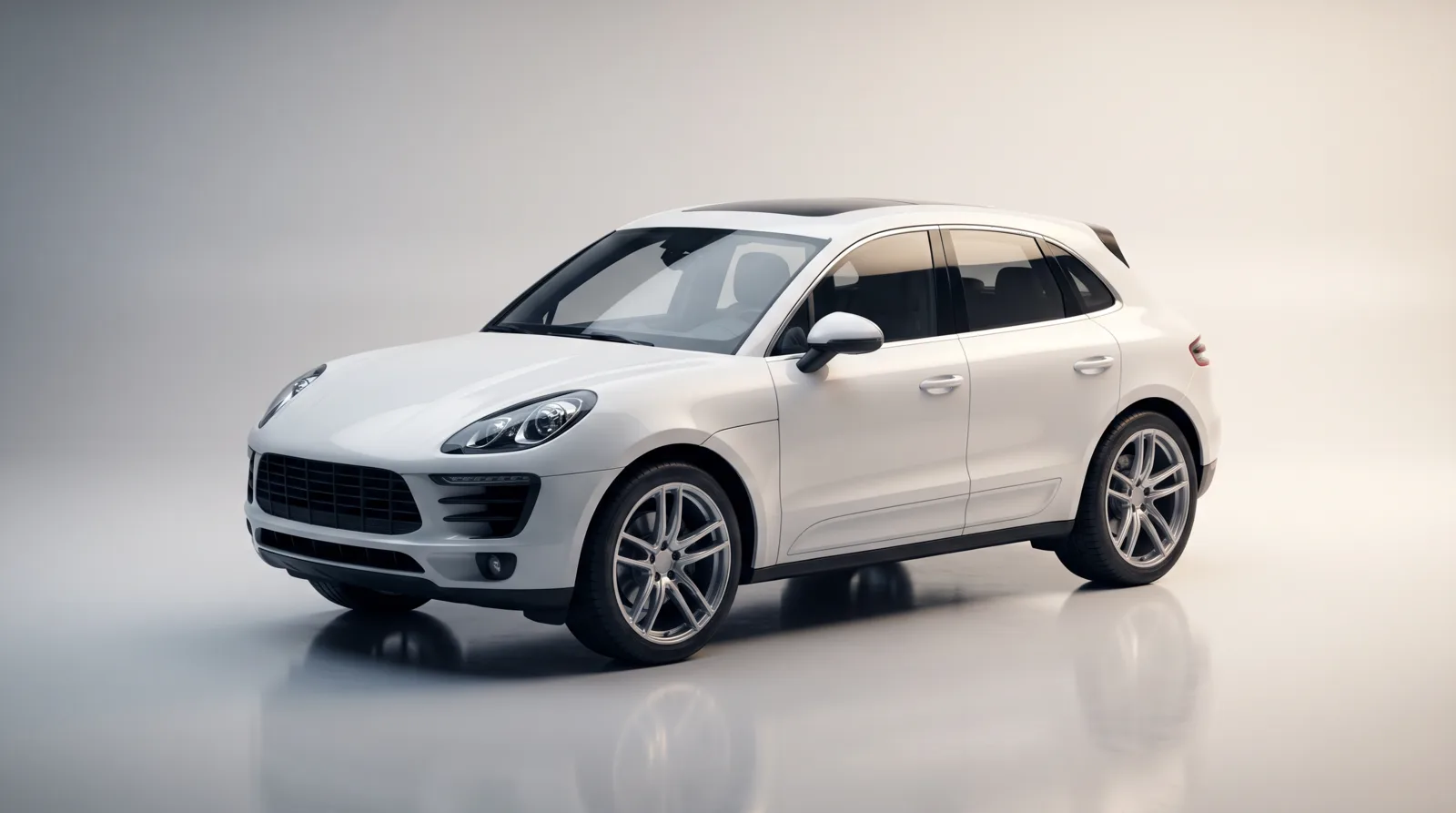
A virtual car photography studio produces studio-grade vehicle photos in software: the car is shot wherever it happens to be parked, and AI replaces the background, corrects the lighting and standardises the composition so the result looks like it came out of a purpose-built booth. It is the software answer to a question dealerships have asked for a decade.
Key takeaways
- A physical booth buys consistency with capital, space and an operator. A virtual studio buys the same consistency with a subscription and no bay.
- The real difference is not quality, it is where consistency lives: in a building's walls and lights, or in software's processing and review.
- A booth is a fixed throughput ceiling — one car in the bay at a time. Virtual capture is limited only by how fast staff can walk cars.
- A virtual studio travels between rooftops. A booth does not, which is the decisive factor for most dealer groups.
- If your intake is volatile, software absorbs the spikes and a booth queues them.
What a physical dealership photo booth requires
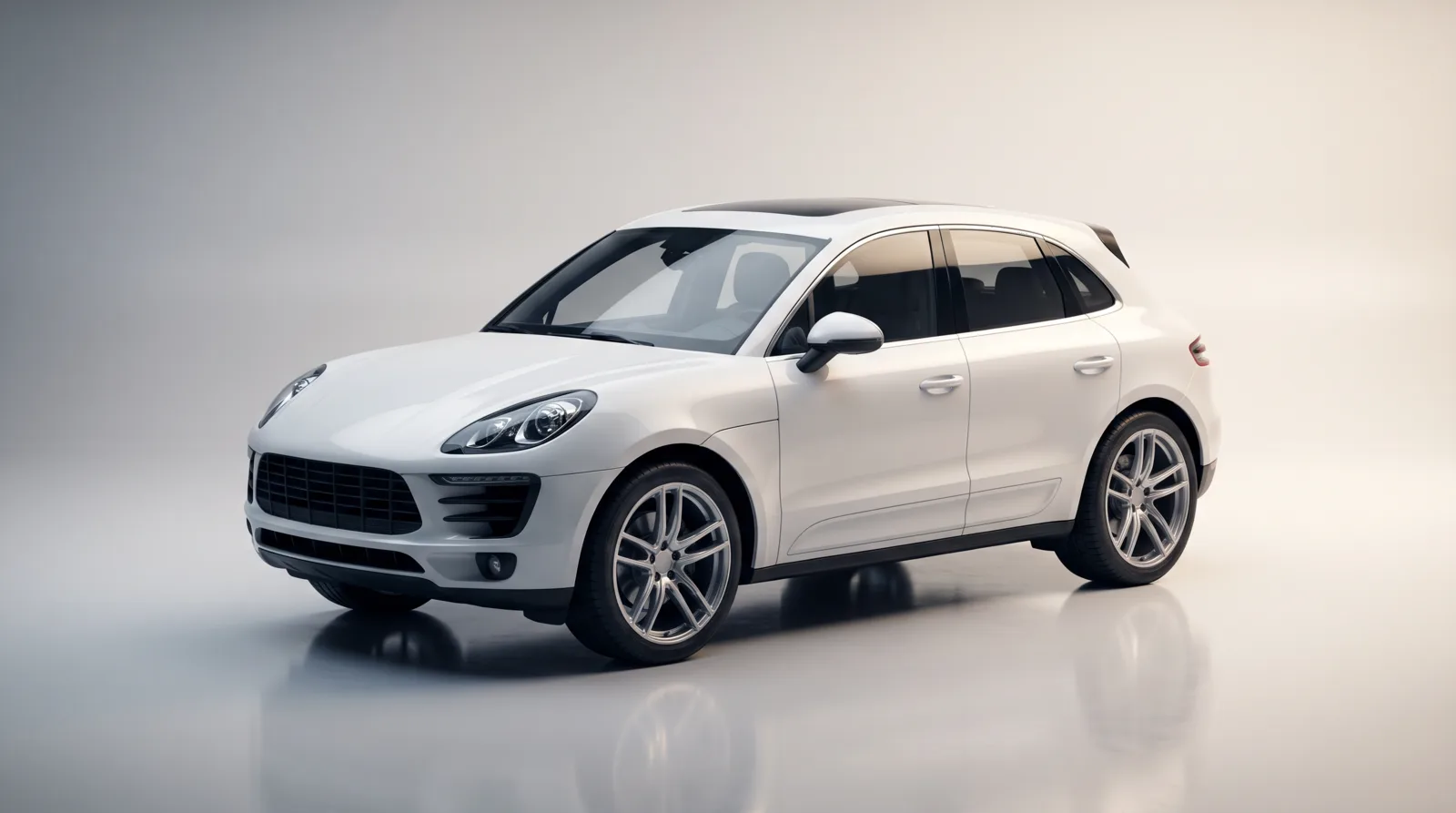
A dealership photo booth is a dedicated, controlled space — usually an insulated bay or freestanding structure — fitted with seamless walls, calibrated lighting and often a turntable. Done properly, it produces the most controlled vehicle photography available. It also requires four things that are easy to underestimate.
Space. A booth bay large enough to shoot full-size trucks and SUVs is a bay not being used for reconditioning, detailing or storage. On a constrained site this is the cost nobody puts in the business case, because it does not appear on an invoice.
Capital. Fit-out, lighting, turntable, climate control and electrical work are a significant up-front investment before the first car is shot.
Throughput discipline. The booth becomes a scheduling bottleneck. Every vehicle must be driven in, positioned, shot and driven out, and the queue grows exactly when intake spikes — which is to say, exactly when speed to listing matters most.
An operator. Someone owns the booth. When that person is on holiday or leaves, quality and speed wobble, and the asset you paid for sits idle.
For high-volume operations with the land and the intake to keep a booth busy every day, the model can work. For most single-point stores, the bay sits idle too often to justify the maths.
What a virtual car photography studio does instead
The virtual approach inverts the model. Instead of bringing the car to a controlled environment, it brings the controlled environment to the car in post-processing.
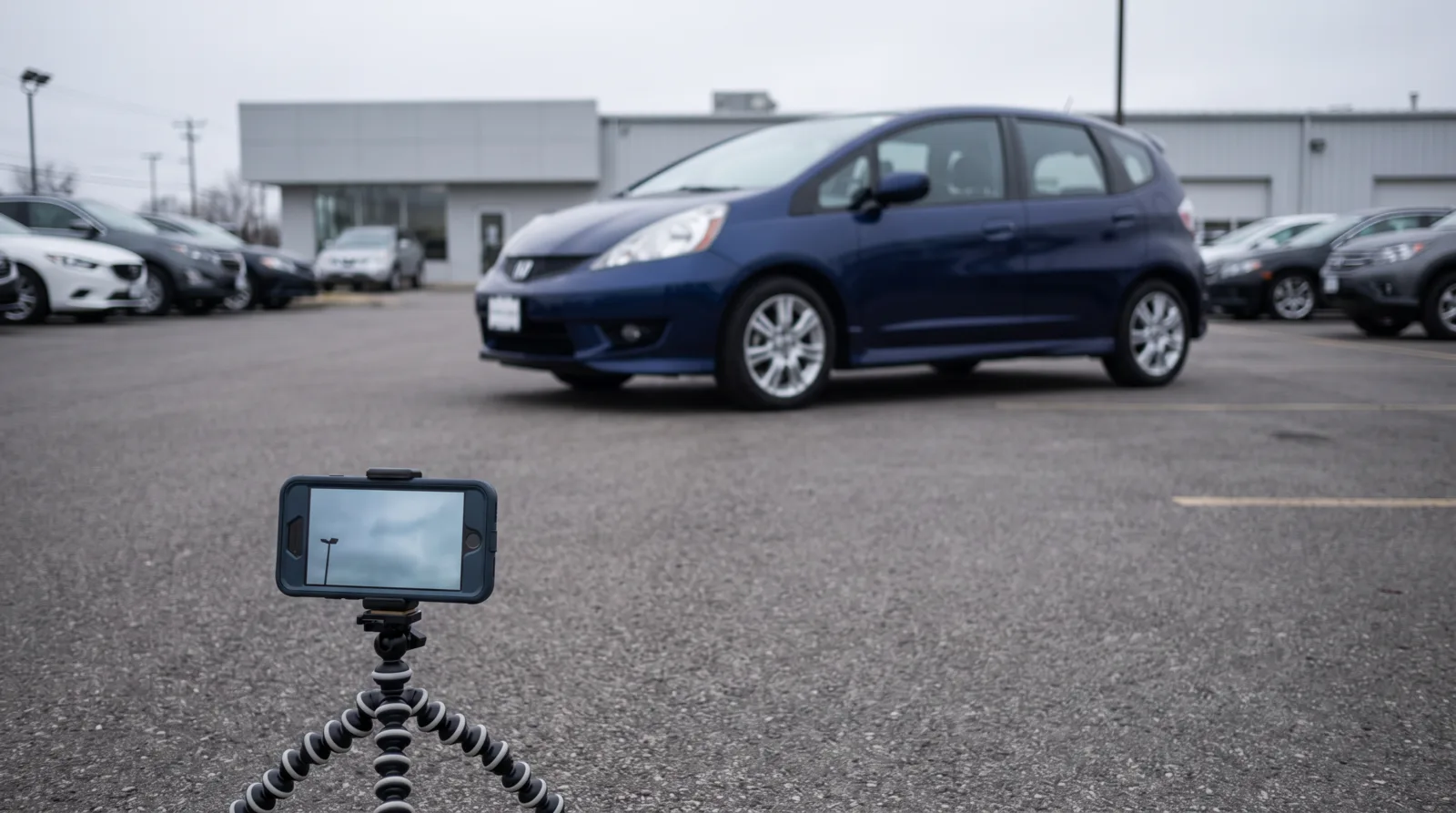
A guided smartphone shoot on the lot captures the raw frames, then AI performs the work the booth's physical infrastructure used to do: it drops the vehicle onto a clean branded backdrop, evens the lighting, straightens the perspective and removes distractions like other cars, dirt or reflections. If you want the detail on how backdrop choice actually affects a listing, using backgrounds: studio, outdoor and virtual covers the trade-offs.
HelloRamp Studio is built on this model, with two additions that matter at inventory scale.
First, it does not require a shoot at all. Studio takes three routes in: a five-minute guided phone walkaround, your existing images — your photographer's work, your booth output, or a pull from your DMS such as vAuto, DealerCenter, Dealer.com or DealerOn — or a bulk conversion of your entire back catalogue in one pass. That last one is the option booth buyers never get: re-merchandising cars that are already on the lot without driving a single one anywhere.
Second, every processed image passes HelloTrust, a 24/7 human review layer, before publication. This addresses the reasonable worry that AI output at volume occasionally gets things wrong. At inventory scale the question was never whether the model is good; it is what happens on the one car in fifty where it is not.
The output goal is the same photo-booth look, on every car, with a virtual photobooth inside an app rather than a building at the edge of the lot.
The comparison that actually matters
| Factor | Physical photo booth | Virtual studio |
|---|---|---|
| Cost shape | Up-front capital plus ongoing space | Subscription scaling with monthly volume |
| Space needed | A dedicated bay sized for full-size trucks | None |
| Throughput | One car in the bay at a time | Limited only by how fast staff walk cars |
| Volatile intake | Queues during spikes | Absorbs spikes |
| Multiple rooftops | One booth per site | Travels; same standard everywhere |
| Staffing | A dedicated operator | Any team member, guided |
| Existing photos | Re-shoot required | Processed as-is, or pulled from the DMS |
| Raw capture quality | The highest available | Very close, corrected in software |
Speed. Booth workflows are limited by physical throughput: one car in the bay at a time. Virtual workflows are limited only by how fast staff can walk cars, and processing runs in parallel. HelloRamp's guided shoot takes under five minutes per car, and Diamond II Auto Sales in Orlando measured arrival-to-live times 2.5x faster after switching to this model. They had no studio at all before, shooting on the lot, in the delivery area and inside the showroom, which is the situation most stores considering a booth are actually trying to escape.
Consistency. Both models solve consistency; that is their shared point. The difference is where consistency lives: in the booth's walls and lights, or in the software's processing and review. The virtual model travels; the booth does not, which matters for dealer groups with multiple rooftops and is usually the argument that settles it.
Quality ceiling. A perfectly run booth still holds the edge for flawless raw capture, and it is worth saying so plainly. The honest question is whether shoppers scrolling a marketplace can tell the difference on a listing image at thumbnail size, and whether that difference is worth the bay, the capital and the operator.
When each option makes sense
Choose a physical booth if you have consistently high daily intake, spare covered space, and a dedicated photography role you intend to keep staffed. A booth run at capacity by someone who owns it is a genuinely excellent asset.
Choose a virtual car photography studio if you want the studio standard across every rooftop and every car without the infrastructure, if your volume fluctuates, or if speed to listing is the metric you are trying to move.
There is also a third answer worth naming: many stores that own a booth keep using it and run the output through a virtual studio anyway, for the background consistency and the downstream formats. The two are not mutually exclusive, and the booth becomes one input among several rather than the whole pipeline. From there the same processed set feeds your 360° spins and your daily social publishing without a second shoot.
Many stores considering a booth build find the comparison settles the question before any concrete is poured.
Frequently asked questions
What is a virtual car photography studio?
A virtual car photography studio uses AI to give vehicle photos shot anywhere the appearance of a professional studio shoot: clean backgrounds, corrected lighting, standardised angles and consistent composition across the whole inventory.
How much does a car dealership photo booth cost?
Costs vary widely with size and specification, but a proper booth involves fit-out of a dedicated bay, professional lighting, often a turntable, and ongoing space and staffing costs. The comparison to make is total booth cost against a software subscription priced on vehicle volume.
Is AI background replacement good enough for listings?
At current quality levels, yes, provided the platform includes quality control. HelloRamp pairs AI processing with HelloTrust human review on every image before it goes live.
Can a virtual studio handle interiors?
Yes. Interior frames get the same lighting and clean-up treatment, and guided capture ensures the interior set is complete and consistently framed across vehicles.
Can I use photos I already have instead of re-shooting?
Yes. A virtual studio can process your photographer's existing images, your booth output, or a pull from your DMS, which means a back catalogue can be re-merchandised without driving any of those cars back out.
HelloRamp.ai is AI visual merchandising for car dealerships: guided capture, daily social publishing and personalised video replies to leads, in one platform. Book a walkthrough using your own vehicles.