
How Many Cars Do Dealerships Sell a Day? The 2025 Numbers, Worked Out
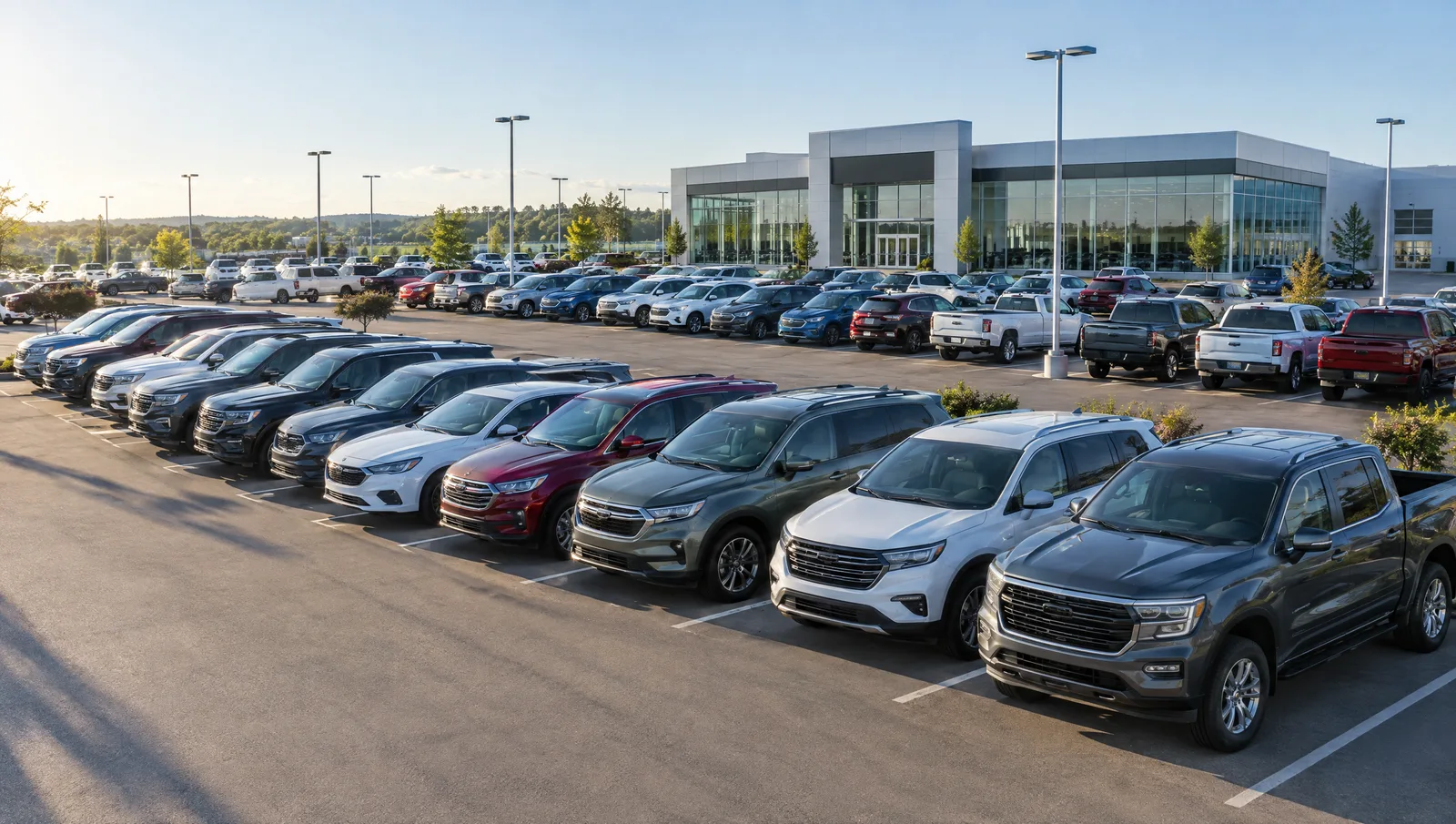
The average US franchised car dealership sells about 4.7 vehicles a day: roughly 2.6 new and 2.1 used, counted over every calendar day of the year. Those figures divide out the annual totals in NADA Data 2025: 955 new vehicles per average store, and 13.1 million used vehicles sold across 16,990 franchised stores.
NADA does not publish a per-day number, so the math is shown below. Independent used-car lots sell far fewer cars on average, and individual stores vary widely around every figure here. The data is for the US. Dealers in Canada, India or anywhere else can run the same calculations on their own numbers.
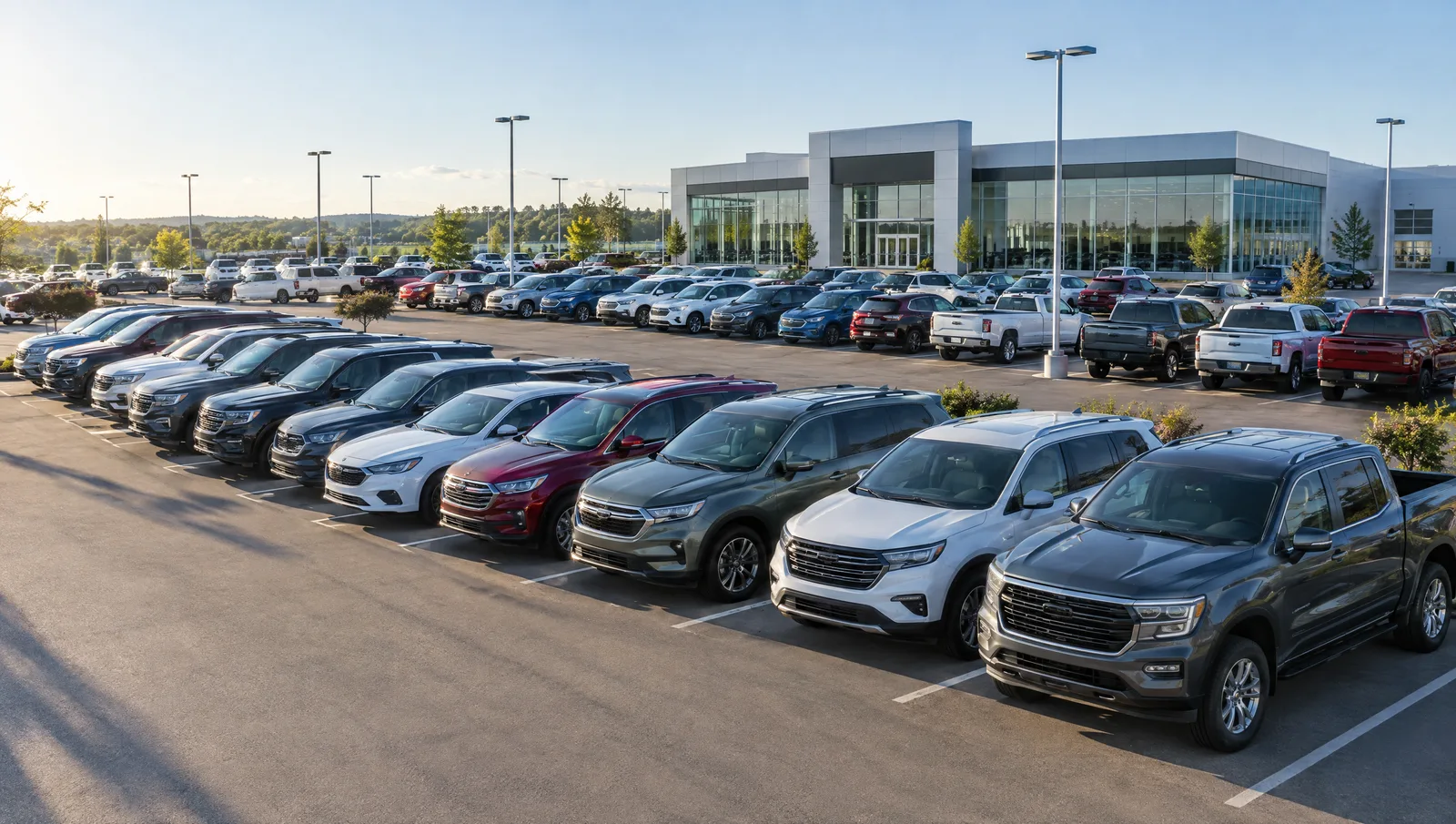
How many cars does a dealership sell a day?
Here is the calculation for an average franchised (new-car) dealership, using NADA Data 2025:
- New: 955 new vehicles per store per year ÷ 365 days = about 2.6 new vehicles a day.
- Used: 13.1 million used vehicles ÷ 16,990 franchised stores = about 771 used vehicles per store per year. 771 ÷ 365 = about 2.1 used vehicles a day.
- Combined: 955 + 771 = 1,726 vehicles per year. 1,726 ÷ 365 = about 4.7 vehicles a day.
In dollars, NADA puts average total sales per franchised store at $76.6 million. That works out to about $210,000 in sales per store per calendar day ($76.6 million ÷ 365), again a derived average rather than a NADA figure.
| Metric | Figure | Source |
|---|---|---|
| Franchised light-vehicle dealerships (2025) | 16,990 | NADA Data 2025 |
| New light vehicles sold by franchised dealers (2025) | 16.2 million | NADA Data 2025 |
| New vehicles sold per average franchised store (2025) | 955 | NADA Data 2025 |
| Used vehicles sold by franchised dealers (2025) | 13.1 million | NADA Data 2025 |
| Average used retail selling price at franchised dealers (2025) | $28,680 | NADA Data 2025 |
| Average total sales per franchised store (2025) | $76.6 million | NADA Data 2025 |
| Used vehicles per franchised store per year | about 771 | Derived: 13.1M ÷ 16,990 |
| Vehicles per franchised store per calendar day | about 4.7 (2.6 new, 2.1 used) | Derived: annual ÷ 365 |
| Vehicles per franchised store per selling day | about 5.8 (3.2 new, 2.6 used) | Derived: annual ÷ 300 (assumption) |
| Total US used-vehicle sales (2025) | 38.6 million | NIADA |
| Used sales by independent dealers (2025) | 9.8 million | NIADA |
How many cars does a dealership sell a month and a year?
Divide the same annual figures by 12. The average franchised store sells about 80 new and 64 used vehicles a month, or about 144 in total. Over a year that is roughly 1,700 vehicles.
For the whole market, NADA counts 16.2 million new light vehicles sold in 2025. NIADA's Used Car Industry Report puts total US used-vehicle sales at an estimated 38.6 million in 2025. Franchised dealers' 13.1 million used sales are about a third of that total. Independent dealers' 9.8 million are about a quarter. The rest moved through other channels.
The 2026 pace is similar. NADA's mid-year 2026 report counted 16,991 franchised dealers and 7.9 million light vehicles sold in the first half of the year.
How many cars does an independent used car dealer sell?
There is no official per-store average for independents, but a rough one can be built. NIADA reports independent dealers sold 9.8 million used vehicles in 2025. Cox Automotive put the count at "roughly 60,000 independent dealers" across the US, but that estimate dates from May 2021.
Using those two numbers: 9.8 million ÷ 60,000 = about 163 vehicles per independent dealer per year. That is about 14 a month and about 0.45 a day, or one sale every two days or so. Treat this as a rough, derived figure. The dealer count is five years old, and independents range from a one-person lot selling a handful of cars a month to used-car superstores selling hundreds.
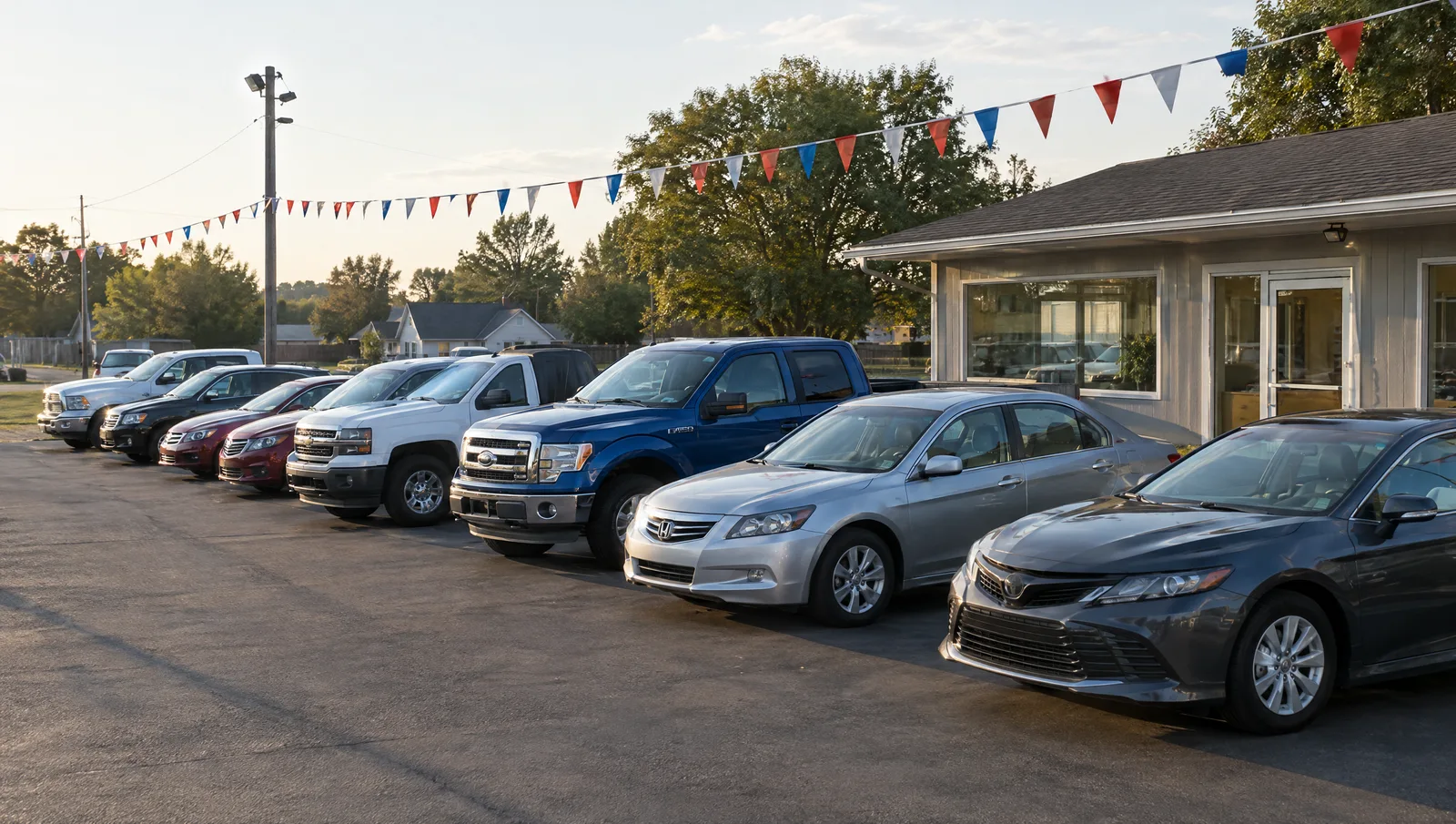
Why do some dealerships sell far more cars than others?
An average hides a wide range. These are the main reasons one store sells far more or fewer cars a day than another:
- Franchise vs independent. Franchised stores sell new and used and have a manufacturer's marketing behind them. Most independents sell used only.
- Brand. High-volume mainstream brands sell more units per store than luxury or niche brands, which earn more per unit instead.
- Market. A store in a growing metro area with many buyers nearby sells more than a rural store with the same brand.
- Month-end and quarter-end. Sales tend to cluster at the end of the month and quarter, when manufacturer and store targets are measured. An average day and the last day of the month look very different.
- Seasonality. Demand rises and falls through the year with weather, tax refunds and model-year changeovers. A store's daily average in one month may not hold in the next.
- Inventory on hand. A store can only sell what it has, and online shoppers can only find what is listed.
Are car dealerships profitable?
Yes, and more than before the pandemic. The Q4 2025 Presidio-NCM Average Dealership Performance Benchmark found average dealership net pretax profit rose 6.3% for full-year 2025, and profitability stayed nearly two times the 2019 level (Car Dealership Guy, February 2026). The year before was harder. Average net pretax profit fell 24.4% in 2024 compared with 2023, though it was still 1.7 times the 2019 level (Digital Dealer, February 2025).
Revenue grew too. NADA reports average franchised dealership revenue rose 4.5% in 2025, to $76.6 million per store.
How should you use your own daily sales number?
The industry average gives you context. Your own number is what you plan with. Three calculations help most.
Marketing cost per car sold
Divide total marketing spend for a period by the number of vehicles sold in the same period.
Example: a store spends $40,000 on marketing in a month and sells 144 vehicles. $40,000 ÷ 144 = about $278 per car sold. Run the same math per lead source (spend on that source ÷ sales attributed to it) to see which sources earn their cost. Our car dealership marketing plan guide covers how to set the budget itself.
Decide what counts as marketing spend and keep that definition the same every month: advertising, third-party listing site fees, purchased leads, website and search costs, and social media spend. If new and used budgets are separate, calculate them separately, because the cost to sell each can differ a lot.
Daily pace to goal
Divide the units still needed by the selling days left. Example: a store with a 150-unit monthly goal has sold 90 with 10 selling days left. It needs 6 sales a day, above the national average of about 5.8 per selling day. That tells the manager early that more appointments are needed.
Internet leads needed per day
A Foureyes study of about 700 US dealerships in the second half of 2023 tracked each step from lead to sale. For used-vehicle internet leads, 64% were contacted, 41% of contacted leads set an appointment, 50% of appointments showed and 40% of shows closed. Multiplied together, about 5.2% of used internet leads became sales (0.64 × 0.41 × 0.50 × 0.40). New-vehicle internet leads ran 60%, 32%, 56% and 42%, or about 4.5%.
Example: to sell one more used car a day from internet leads, a store at those rates needs about 19 more used-vehicle internet leads a day (1 ÷ 0.052). Treat it as an estimate, because Foureyes measured each rate over the same period rather than following individual leads. Raising the contact and show rates is often cheaper than buying more leads. Our guide to reducing dealership appointment no-shows covers how.
One more factor is time to market. Every day a used unit sits unphotographed and unlisted is a day it cannot be one of those 2.1 daily used sales. Our article on days to photo covers how to measure that gap. HelloRamp Studio's AI-guided vehicle photography is built to shorten it: a guided smartphone shoot of under five minutes per car produces the listing photos, the 360° spin and the video tour. HelloRamp Social then lists new arrivals on Facebook Marketplace automatically, with the right photos in the right order.
Sources
- NADA: NADA Data 2025, Annual Financial Profile of America's Franchised New-Car Dealerships (2026)
- NADA: NADA Data, 2026 Mid-Year Report (2026)
- NIADA: Used Car Industry Report shows independent used sales top 9.8 million in 2025 (March 2026)
- Cox Automotive: Independent dealers are poised to thrive as driving force in recovery (May 2021)
- Car Dealership Guy: Presidio-NCM benchmark, auto dealers enjoying new normal of higher profit era (February 2026)
- Digital Dealer: Auto dealership profitability improved at end of 2024 (February 2025)
- Foureyes: Dealership data study on appointment rates (February 2024)
Frequently asked questions
How many cars does a dealership sell a month?
The average US franchised dealership sells about 80 new and 64 used vehicles a month, roughly 144 in total. These figures come from dividing NADA Data 2025 annual totals by 12. Individual stores vary widely by brand, market and season.
How many used cars do franchised dealers sell per store?
Franchised dealers sold 13.1 million used vehicles in 2025 across 16,990 stores, according to NADA. That works out to about 771 used vehicles per store per year, about 64 a month, or about 2.1 per calendar day.
How many cars does an independent used car dealer sell?
A rough average is about 163 vehicles a year, or about 14 a month. It divides NIADA's 9.8 million independent used sales in 2025 by a 2021 Cox Automotive estimate of roughly 60,000 independent dealers, so treat it as a guide only.
How do you calculate marketing cost per car sold?
Divide total marketing spend for a period by vehicles sold in that period. A store spending $40,000 in a month and selling 144 vehicles pays about $278 per car sold. Repeat the calculation per lead source to compare what each source costs.
Are car dealerships still profitable?
Yes. The Presidio-NCM benchmark found average dealership net pretax profit rose 6.3% in 2025 and stayed nearly twice the 2019 level. That followed a 24.4% decline in 2024 compared with 2023.
HelloRamp.ai is AI visual merchandising for car dealerships: guided capture, daily social publishing and personalised video replies to leads, in one platform. Book a walkthrough using your own vehicles.