
Automotive CRM: What Dealership CRM Software Does and How to Choose One

An automotive CRM is customer relationship management software built for car dealerships. It collects every lead from every source into one record per customer, assigns follow-up tasks to sales staff, and tracks each contact from first inquiry to sale and service. The dealer management system records the deal. The CRM records the conversation that led to it.
A dealership CRM decides who gets called, when, and with what information in front of them. That is why two stores with the same leads and the same inventory can get very different results.

What does an automotive CRM do for a dealership?
Automotive CRM software handles a set of jobs that are specific to how car stores sell:
- Lead intake from every source. Website forms, marketplace inquiries, chat, phone calls, OEM leads, walk-ins and service customers all land in one queue, tagged with their source.
- Deduplication. A shopper who submits a form on the website and another on a marketplace should become one customer record, not two reps calling the same person.
- Tasks and cadences. The CRM schedules calls, texts and emails by day, assigns them to a rep, and shows managers what is overdue.
- Desking handoff. When a customer is ready to talk numbers, the CRM passes the customer and vehicle to the desk and then to the DMS, so staff do not re-key data.
- Equity mining. The CRM compares existing customers' loans or leases with current vehicle values and flags people who could trade into a newer car at a similar payment.
- Service-to-sales. Customers in the service lane with older, high-mileage or high-equity vehicles are flagged for a sales conversation.
- Reporting. Response times, appointments set and shown, and closed deals by rep, lead source and month.
How is a dealership CRM different from a generic CRM?
A general-purpose CRM can store contacts and deals, but a CRM for car dealerships is built around a vehicle and a showroom. The differences show up in daily work:
- Vehicle-centered records. Each opportunity is tied to a specific VIN or stock number, a trade-in and often a co-buyer.
- DMS connection. Sold deals, service visits and loan terms come from the DMS, which is what makes equity mining and service-to-sales possible. Our dealer management system guide explains what the DMS holds.
- Automotive lead formats. Dealer lead feeds from OEMs and marketplaces arrive in industry formats that a dealership CRM reads without custom work.
- Floor traffic logging. Showroom visits and test drives are logged alongside online leads.
- Manager tools. Desk logs, turnover to a manager and daily "save-a-deal" lists are built in.
Which automotive CRM vendors do dealers compare?
There is no single best automotive CRM for every store. The better fit usually depends on which DMS you run, your franchise requirements and how your BDC is organized. These are established auto dealership CRM software vendors and their owners:
| CRM | Owner | Note |
|---|---|---|
| VinSolutions | Cox Automotive | Cox made it "its primary CRM solution" (Cox Automotive, 2016) |
| Elead (ELEAD1ONE) | CDK Global | Acquisition completed in September 2018 (Auto Remarketing, 2018) |
| DealerSocket | Solera | Solera announced the acquisition in May 2021, when DealerSocket served "over 9,000 automotive dealerships" (DealerSocket, 2021) |
| DriveCentric | Privately held | Fully certified as a NextGen CRM partner with BMW North America (PR Newswire, 2025) |
What should you ask on a dealership CRM demo?
Use this checklist on every demo:
| Question to ask | Why it matters | What a good answer includes |
|---|---|---|
| How does it integrate with our DMS? | Equity mining and sold-deal matching depend on it | Named DMS, sync frequency, which fields move each way |
| How does it attribute lead sources? | You need cost per sale by source | Source captured on intake and kept through the sale |
| Is there a mobile app for reps? | Reps work the lot, not a desk | Full lead view, texting, calling and photo or video sending on a phone |
| What texting compliance features exist? | Consent and quiet hours are legal requirements | Consent records, opt-out handling, time-of-day limits by the customer's location |
| Is there an open API? | Video, chat and AI tools need to read and log activity | Documented API, partner list, who pays for the connection |
| How are duplicates handled? | Duplicate records split history and double-call customers | Automatic matching on phone and email with a manager merge tool |
Why does CRM data quality decide follow-up results?
A CRM cannot follow up well on data it does not have. Pied Piper's 2026 lead response study warned that "system-to-system failures can occur when data does not transfer properly between a dealership's DMS, website, CRM, AI tools, and outbound communication channels" (Car Dealership Guy, 2026).
The same study shows why this matters. Across 3,290 dealership websites, the 2026 industry average score was 71 out of 100. Dealers answered a "typical" inquiry within 24 hours 78% of the time, often through automated AI messages, but only 51% of the time when customers asked more complex questions (Pied Piper, via AutoSuccess, 2026). Pied Piper also reports that, historically, dealers who move from a score under 40 to over 80 "sell 50% more units from the same quantity of internet leads" (Auto Remarketing, 2025).
Common data problems to audit each month:
- Leads with no phone number or an unformatted one, so texting and calling fail.
- Duplicate customers created by different lead sources.
- Vehicle of interest missing or pointing to a sold unit.
- Lead source recorded as "unknown" or overwritten by the last touch.
- Sold customers still in active sales cadences because the DMS deal never matched.
How do you re-engage old dealership leads in the CRM?
Aged leads are shoppers who inquired, did not buy, and fell out of active follow-up. A CRM that has been in use for a few years can hold a large number of them. A practical process:
- Pull a clean list. Filter leads 30 to 180 days old with no sale in the DMS and no purchase elsewhere noted. Remove anyone who opted out.
- Check consent before texting. Promotional texts need the right consent on file. If you are unsure, use email or a phone call first, and confirm your consent rules with your compliance counsel.
- Segment by reason. Group by vehicle type, price range, and the reason noted when the lead went cold (payment, trade value, timing, credit).
- Match to current inventory. Send each shopper one specific vehicle that fits what they asked for, with the price and a link to its page. A message about a real car gives the shopper something concrete to answer. "Are you still in the market?" does not.
- Change the offer, not only the message. If the lead stalled on trade value, lead with a fresh appraisal. If it stalled on payment, lead with a lower-priced unit.
- Keep the cadence short. Two or three touches over two weeks, then move non-responders back to a monthly list.
- Track results by segment. Next quarter's list then starts with the groups that responded.
Where does video follow-up fit alongside the CRM?
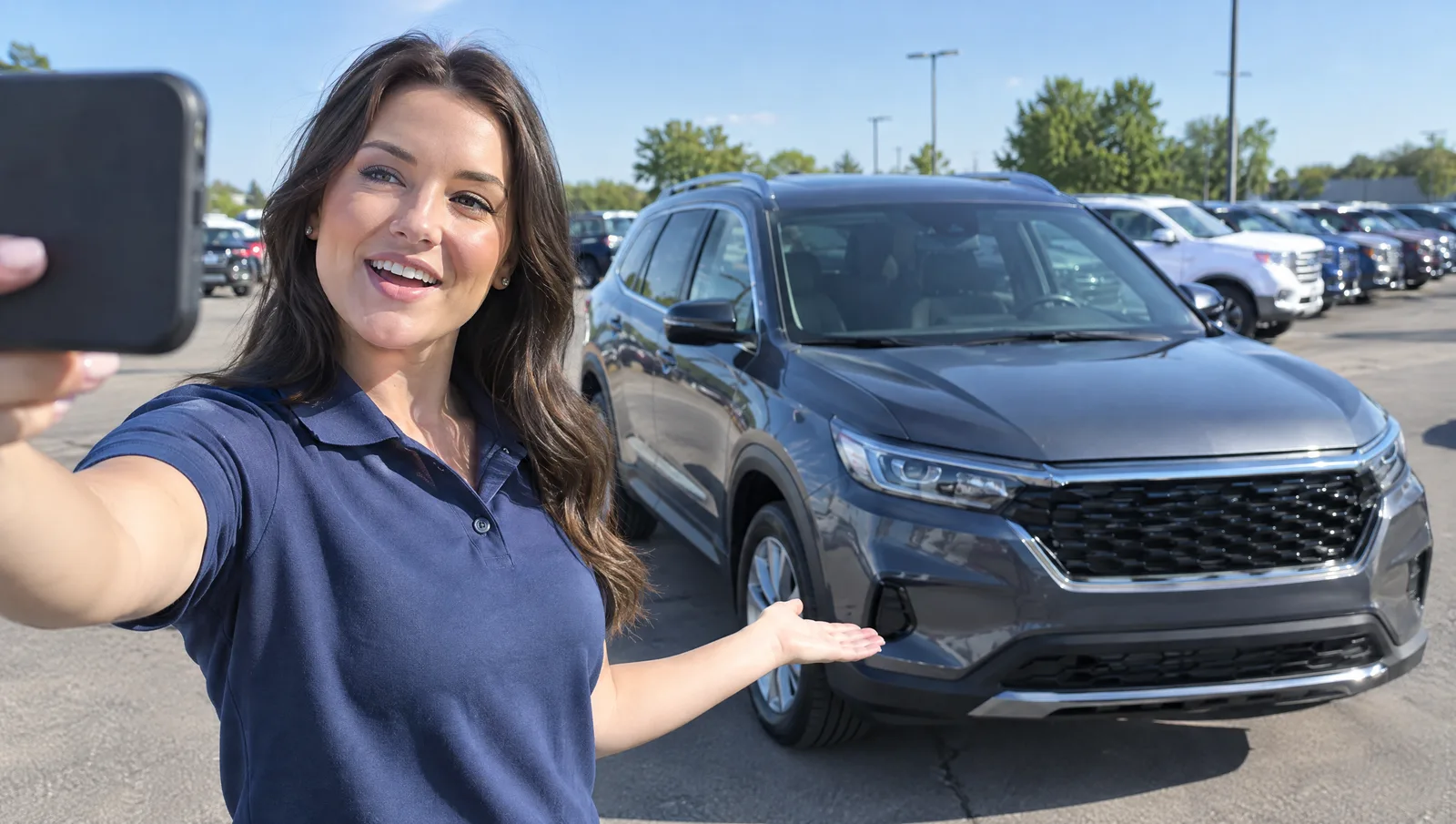
A CRM schedules the follow-up. It does not make the message worth opening. Personalized video is one way to make a follow-up specific, especially for aged leads, where a short clip of the exact car gives the shopper a new reason to reply.
HelloRamp Engage creates a personalized video reply in about 10 seconds once a rep's AI avatar is set up. The rep can use the avatar over the vehicle's photos and video from HelloRamp Studio, or record the rep and the car together with the dual camera. The rep sends one branded link by text, email or direct message, and Engage alerts the rep the moment the lead watches. Where Engage is connected to the store's CRM, it pulls the lead and vehicle from the CRM record and logs every send and view back to it. HelloRamp.ai platform data, as of August 2026, shows a 26% higher customer reply rate with video.
CRM connections differ by vendor and setup, so bring your CRM name to a HelloRamp.ai demo and ask how Engage works alongside it at your store.
Sources
- Cox Automotive: VinSolutions as Cox Automotive's primary CRM solution (2016)
- Auto Remarketing: CDK Global finalizes acquisition of Elead1One (2018)
- DealerSocket: Solera to acquire Omnitracs and DealerSocket (2021)
- PR Newswire: DriveCentric achieves full certification as a NextGen CRM partner with BMW NA (2025)
- eCFR: 47 CFR 64.1200, delivery restrictions (current)
- Florida Senate: Florida Statutes 501.616 (2024)
- Car Dealership Guy: Dealers are responding faster than ever to web leads, but automation risks linger (2026)
- Pied Piper PSI: Infiniti dealers ranked highest in 2026 Pied Piper Internet Lead Effectiveness study (AutoSuccess) (2026)
- Auto Remarketing: Dealerships' responsiveness to internet leads hits record high again (2025)
Frequently asked questions
Who owns the major automotive CRM brands?
VinSolutions is a Cox Automotive brand, Elead is owned by CDK Global, and DealerSocket is owned by Solera. DriveCentric is privately held. Ownership can affect how easily a CRM shares data with a DMS from the same or a different company.
What should a dealership CRM integrate with?
At minimum, a dealership CRM should connect to the DMS for sold deals and service history, to the website and marketplaces for lead intake, and to phone and texting tools. An open API also lets video, chat and AI tools read lead records and log their activity.
How do you re-engage aged leads in a dealership CRM?
Filter older unsold leads, remove opt-outs, check consent before texting, and group them by vehicle type and why they stalled. Then send each shopper one specific in-stock vehicle that fits their original request, keep the cadence short, and track replies by segment.
Can video messages be sent to leads stored in a dealership CRM?
Yes. Reps can record or generate a personalized video, send it as a link by text or email to the lead's contact details, and log the activity in the CRM. How the video tool and CRM connect depends on the vendors, so confirm it on a demo.
What data problems cause missed follow-up in a CRM?
Common causes are duplicate customer records, missing or badly formatted phone numbers, a vehicle of interest that has already sold, unknown lead sources, and sold customers left in active sales cadences because the DMS deal never matched the CRM record.
HelloRamp.ai is AI visual merchandising for car dealerships: guided capture, daily social publishing and personalised video replies to leads, in one platform. Book a walkthrough using your own vehicles.